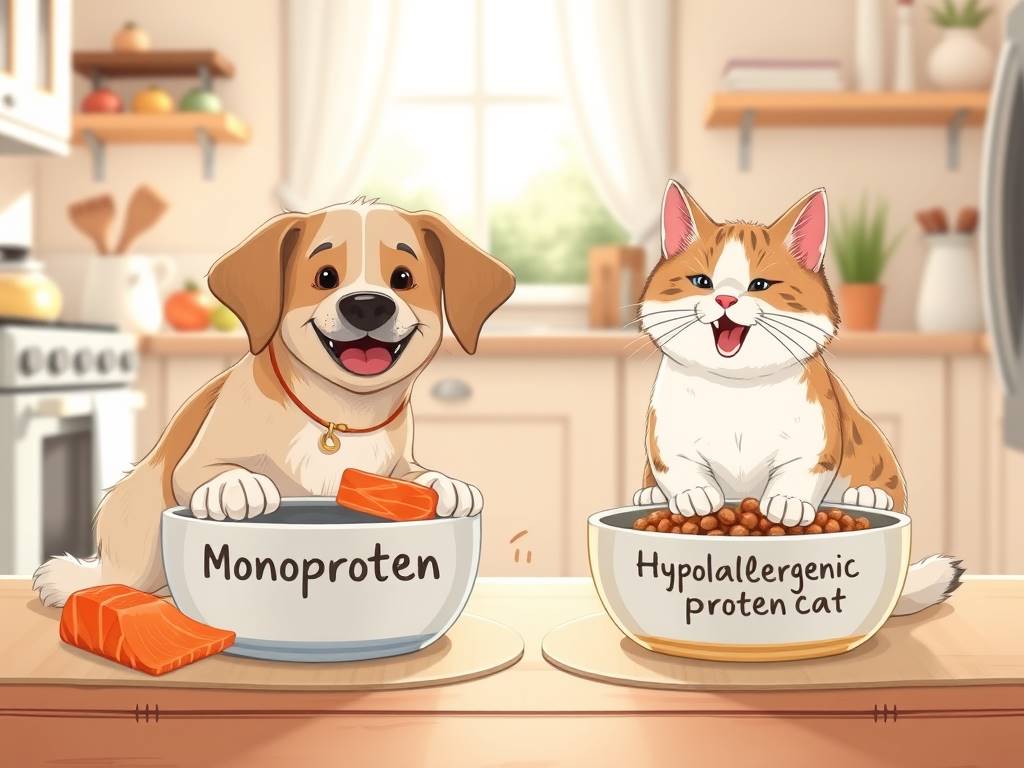
Nutrition is the foundation of our pets’ health and happiness. But when allergies, sensitive tummies, or persistent itching appear, many pet parents wonder: “Which food is the right choice?”
#petnutrition #petfood #dogfood #catfood #monoprotein #hypoallergenic
Today, let’s explore the main differences between monoprotein and hypoallergenic diets, so you’ll know when each one is recommended.

What is Monoprotein Food?
Monoprotein food contains only one source of animal protein (e.g., lamb only, salmon only, duck only).
It’s ideal for elimination diets, when we want to identify if a particular protein is causing an allergic reaction.
It reduces the chance of a reaction in pets with a known sensitivity to specific proteins.
Example: A dog allergic to chicken can be switched to a salmon-only diet.
What is Hypoallergenic Food?
Hypoallergenic food is specially designed for pets with confirmed or multiple food allergies.
It usually contains hydrolyzed protein, meaning the proteins are “broken down” into smaller molecules that the immune system is less likely to recognize.
It’s the safest choice when we don’t know which protein is the culprit, or when multiple allergies are involved.
Example: A cat with chronic itching and sensitivities to different foods may need a diet with hydrolyzed soy protein.
| Aspect | Monoprotein | Hypoallergenic |
| Protein source | Single (e.g., lamb only) | Hydrolyzed (broken into small molecules) |
| Purpose | Identify allergen | Minimize immune response |
| When to use | First step in elimination diet | Severe or multiple allergies |
| Availability | Commercial options available | Mostly veterinary diets |

The Role of Your Vet
Every diet change should be made with your vet’s guidance. If your pet shows:
- persistent itching,
- skin problems,
- recurring ear infections, or
- digestive issues (diarrhea, vomiting),
it’s important to consult your vet for the right nutritional plan.
Tips for Switching to a New Diet
Transition gradually over 7–10 days, mixing the new food with the old.
Avoid treats or “snacks on the side” – they can interfere with diagnosis.
Be patient: results may take 3–8 weeks to show.
Frequently Asked Questions
Can I feed monoprotein food long-term?
Yes, as long as it’s nutritionally complete and carefully chosen.
How soon will I see results with a hypoallergenic diet?
Usually within 4–6 weeks, depending on the pet and severity of symptoms.
What matters most is finding the right diet that brings health, comfort, and joy to your pet. Because when they feel good, our daily life is filled with harmony – and that’s the greatest reward for every pet parent.

#pethealth #healthypets #happypets #petfoodharmony


Θα χαρώ να διαβάσω τα σχόλιά σας