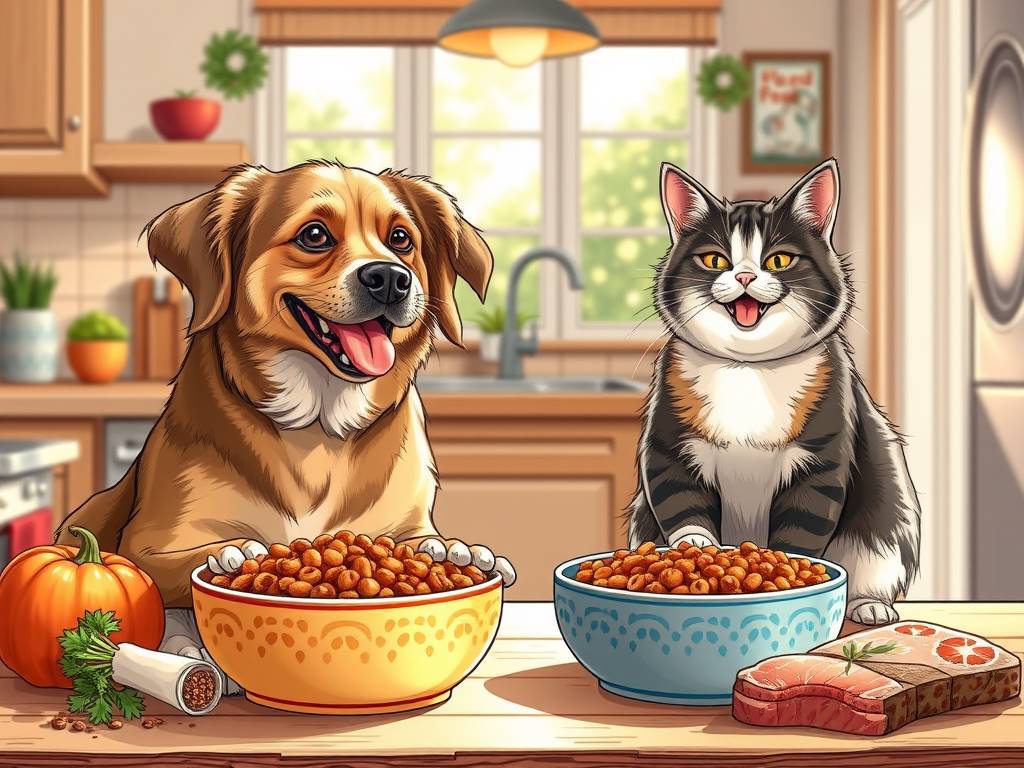
If you have a dog or cat, chances are you’ve come across the term grain-free food. In recent years, it has become quite a trend – and not without reason.
But what exactly does “grain-free” mean, and when might it be a good choice for your furry friend? Let’s find out together!
What is grain-free food?
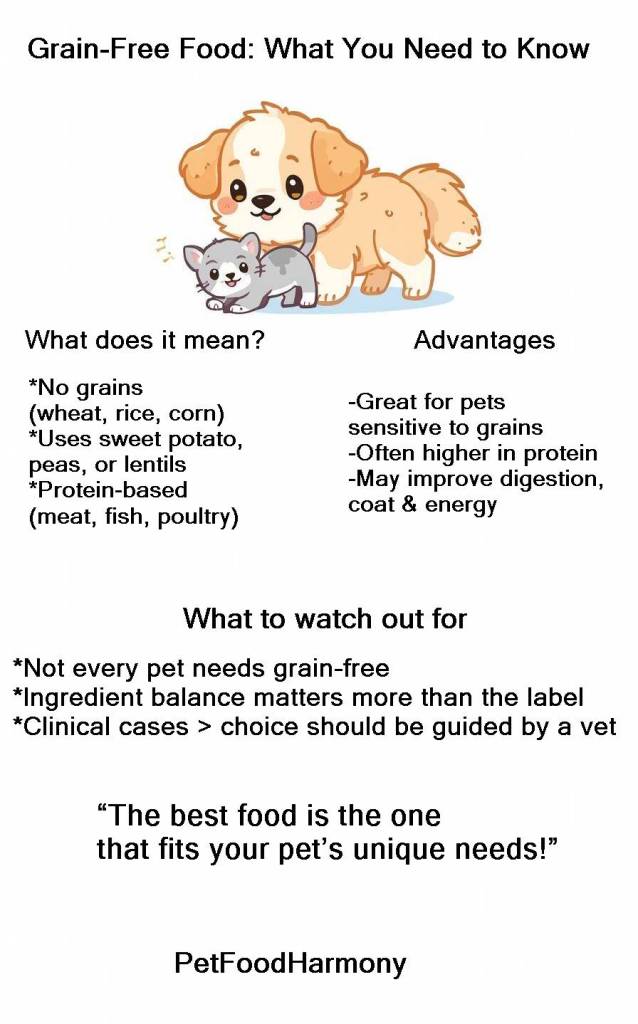
Grain-free simply means that the food does not contain grains such as wheat, corn, rice, or barley. Instead, other carbohydrate sources are used, like sweet potatoes, peas, or lentils, which are easy to digest and provide energy.
The foundation of these diets is always protein, coming from meat, fish, or poultry – the very things our pets naturally love and need most.
Why consider grain-free?
Perfect if your pet shows sensitivity or intolerance to grains.
Often contains a higher protein content, supporting muscle strength and vitality.
Can help maintain a healthy coat and skin, while also supporting digestion.
Some pet parents notice more energy and better mood in their pets after switching to grain-free food.

What the research says
A few studies suggest that:
Grain-free diets can be digestible and may even improve stool quality, thanks to the different carbohydrate sources.
Without grains, there is less risk of mycotoxins – substances sometimes present in low-quality cereals.
In some pets, small improvements in skin and coat condition have been observed, especially when the food is of high quality and well-balanced.
Of course, research is still limited and doesn’t suggest that grain-free is necessary for every pet.
Things to keep in mind
- Not all pets are allergic or sensitive to grains. If your pet eats well, has a shiny coat, good energy, and no discomfort, there may be no reason to switch.

- Also, when a grain-free food is heavy in legumes, it’s important to maintain the right balance with other ingredients.
- It’s not just about “no grains” – the overall quality of the food matters most.
How to make the right choice
Read the label: Check the main protein source and what replaces the grains.
Think about your pet’s needs: A lively puppy has different requirements than a calm indoor cat.
Clinical cases: If your pet has a specific medical condition, food choices should always be made together with your veterinarian, as part of their care.
Grain-free food can be an interesting – and often beneficial – option for many pets, especially if you want to avoid grains or you’ve noticed they don’t suit your furry friend. But it’s not a “one-size-fits-all” solution.
The key is finding the food that truly meets your pet’s unique needs and personality. After all, every dog and cat is one of a kind – and so should be their nutrition.


Θα χαρώ να διαβάσω τα σχόλιά σας