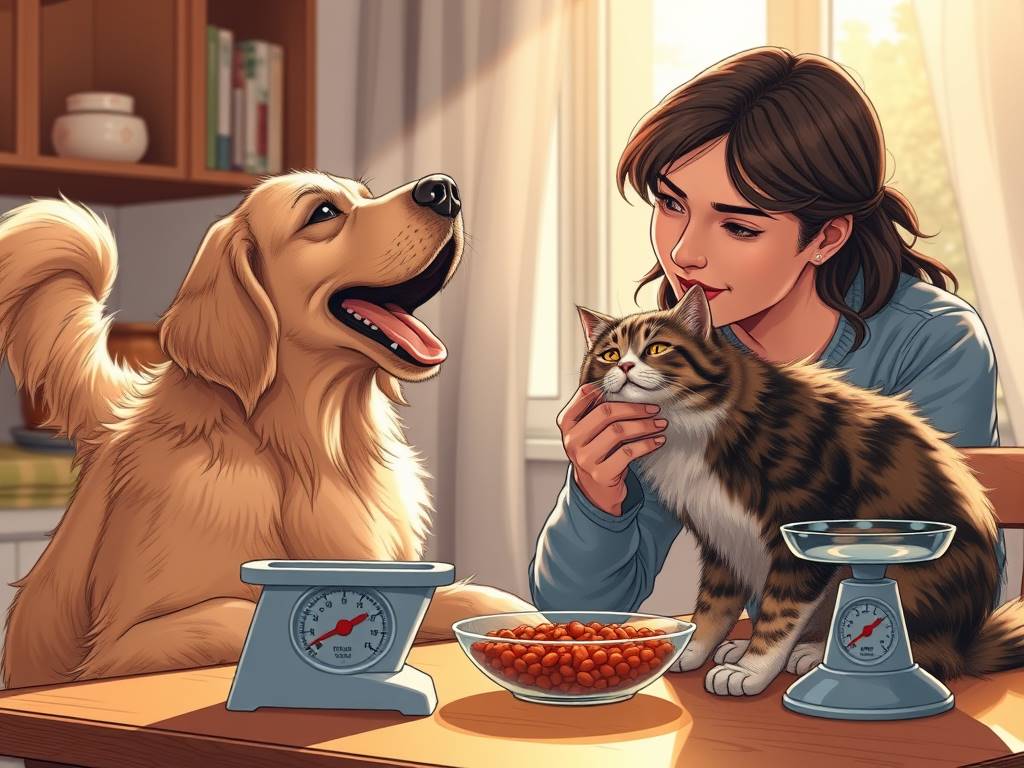
When Love Turns Into Calories: Understanding Pet Overfeeding
That happy tail wag or soft purr can melt your heart — and it’s so easy to show love with extra food or treats. But over time, this act of affection can turn into something dangerous: pet overfeeding.
It’s one of the most common — yet often invisible — issues pet parents face.
Let’s explore what science says, why it happens, and how you can keep your furry friend both healthy and happy.
What Science Says About Pet Overfeeding
- Portion size matters
In a controlled study of 32 dogs, increasing portions to 150–300% led to significantly higher consumption. (PMC6488012)Just like humans, pets eat more when more food is offered.
- The scale of the problem
A 2022 APOP survey found that 61% of cats and 59% of dogs were overweight or obese. Yet, only a small fraction of owners recognized it — 28% of cat owners and 17% of dog owners admitted their pets were overweight. (Pet Obesity Prevention)
Another study by Sure Petcare revealed that 72% of pet parents admitted to overfeeding their pets at least once. (MSD Animal Health)
- Owner lifestyle connection
A fascinating cross-analysis showed that overweight owners were statistically more likely to have overweight dogs. (PMC9147579)Pets mirror their humans — in diet, activity, and habits.
- Health consequences
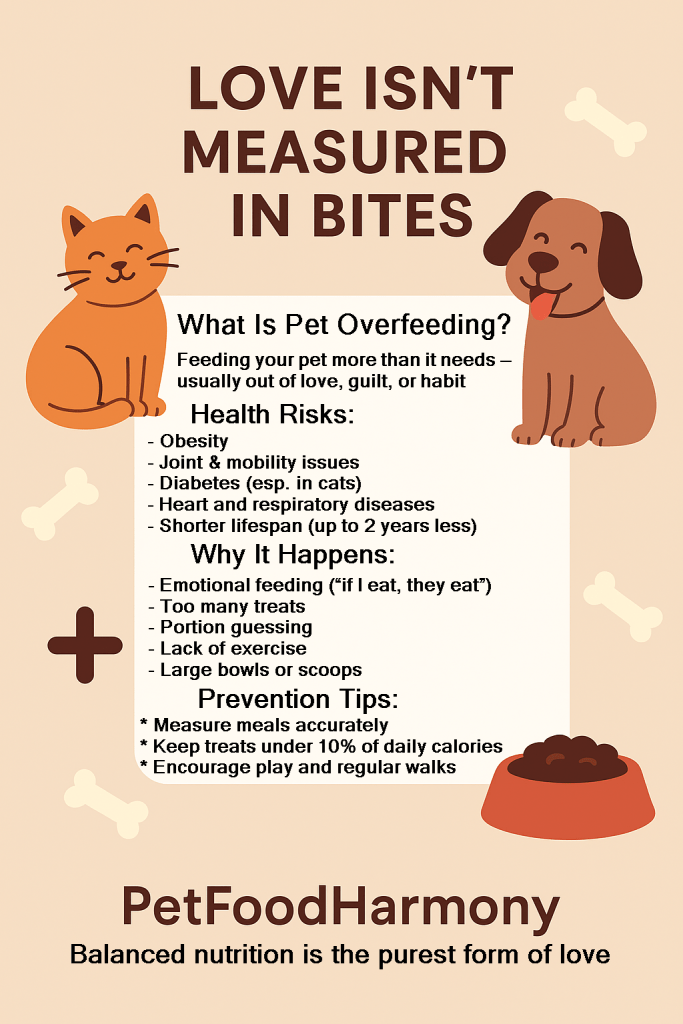
Pet obesity is linked to:
- Arthritis due to increased joint pressure
- Diabetes, especially in cats
- Cardiovascular and respiratory problems
- Reduced life expectancy — overweight pets can live up to 2 years less than those at healthy weight (Andes Straley Vet).
A 2023 Nature study found that severely obese pets (> 40% overweight) had significantly worse outcomes during weight management programs. (Nature.com)
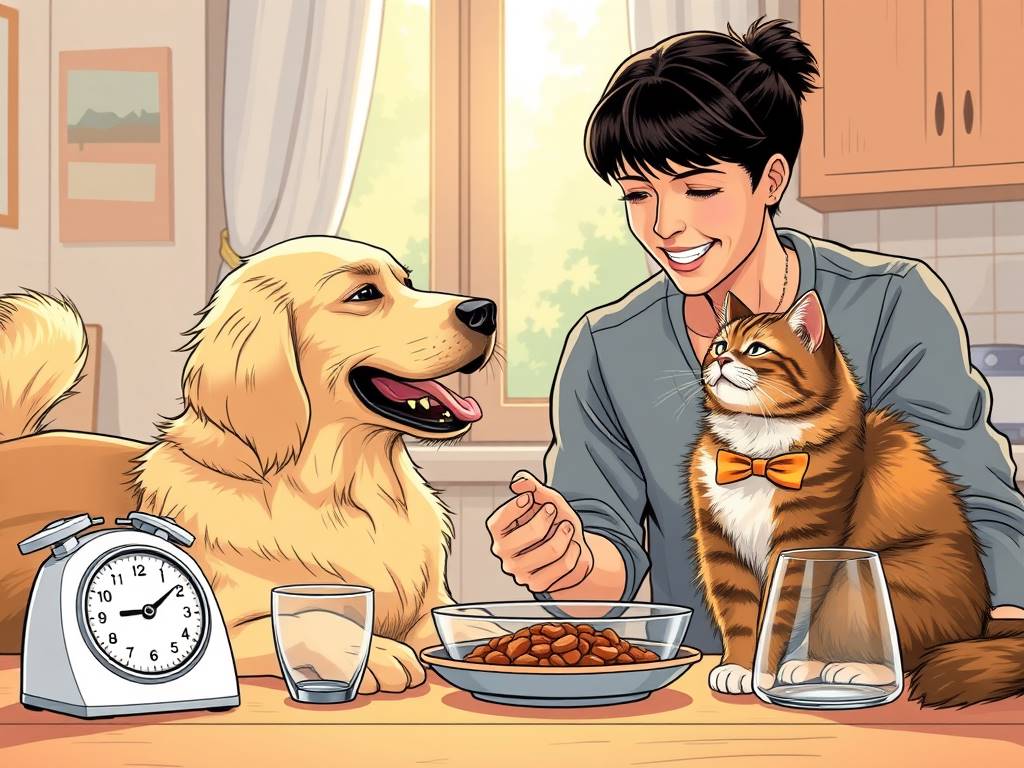
Why Overfeeding Happens
- Portion perception – When you always serve large portions, your pet learns to expect them.
- Treats as love – Treats shouldn’t exceed 10% of daily calorie intake. (Zoetis Petcare)
- Lack of awareness – Many owners don’t know their pet’s caloric needs. (Pet Obesity Prevention)
- Sedentary lifestyle – Less movement = fewer calories burned. (PMC5607608)
- Bowl size and feeding tools – Large bowls and scoops encourage larger servings. (PMC6488012)
What You Can Do: Practical Tips
- Calculate your pet’s caloric needs
Ask your vet for the exact calorie requirements based on age, breed, weight, and activity level.
- Weigh every portion
Use a kitchen scale or measuring cup — avoid estimating “by eye.”
- Learn to assess Body Condition Score (BCS)
A visual and tactile system to check if your pet’s body fat is in a healthy range. (Pet Obesity Prevention)
- Treats — keep them minimal
Treats are okay but should stay below 10% of daily calories. Break them into smaller pieces or use puzzle feeders for enrichment.
- Increase activity
Regular walks, playtime, or agility games help burn calories and strengthen the human-animal bond.
- Regular vet check-ups
Weigh your pet every 1–2 months and adjust feeding plans as needed.
- Work with your vet
If your pet is already overweight, follow a supervised weight-loss program to avoid nutritional deficiencies.
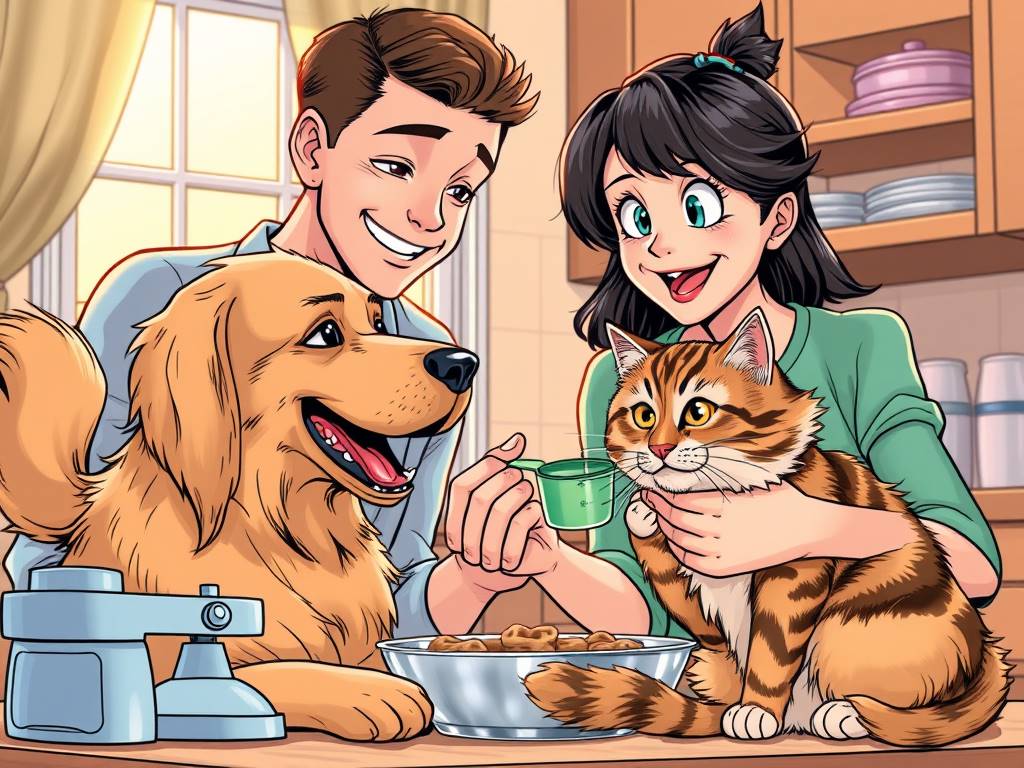
PetFoodHarmony’s Philosophy
At PetFoodHarmony, we believe balanced nutrition is the purest form of love. It’s not about how much you feed, but how well. Through expert articles, feeding tools, and personalized diet suggestions, we help you nurture your pet’s health — with harmony, not excess.
Frequently Asked Questions (FAQ)
- How do I know if my pet is overweight?
Check if ribs are hard to feel, there’s no visible waist, or the belly sags — signs of excess fat. Ask your vet for a Body Condition Score assessment.
- Can I still give my pet treats?
Yes — in moderation. Treats should never exceed 10% of total calories.
- How often should I weigh my pet?
Every 1–2 months, especially if you’re adjusting their diet or activity level.
- Does reducing food really help my pet lose weight?
Yes, but it must be gradual and under veterinary supervision to prevent nutrient loss.
- What if my pet is severely overweight?
Start a structured weight-loss plan with professional guidance. Combine reduced portions, activity, and regular monitoring.


Θα χαρώ να διαβάσω τα σχόλιά σας