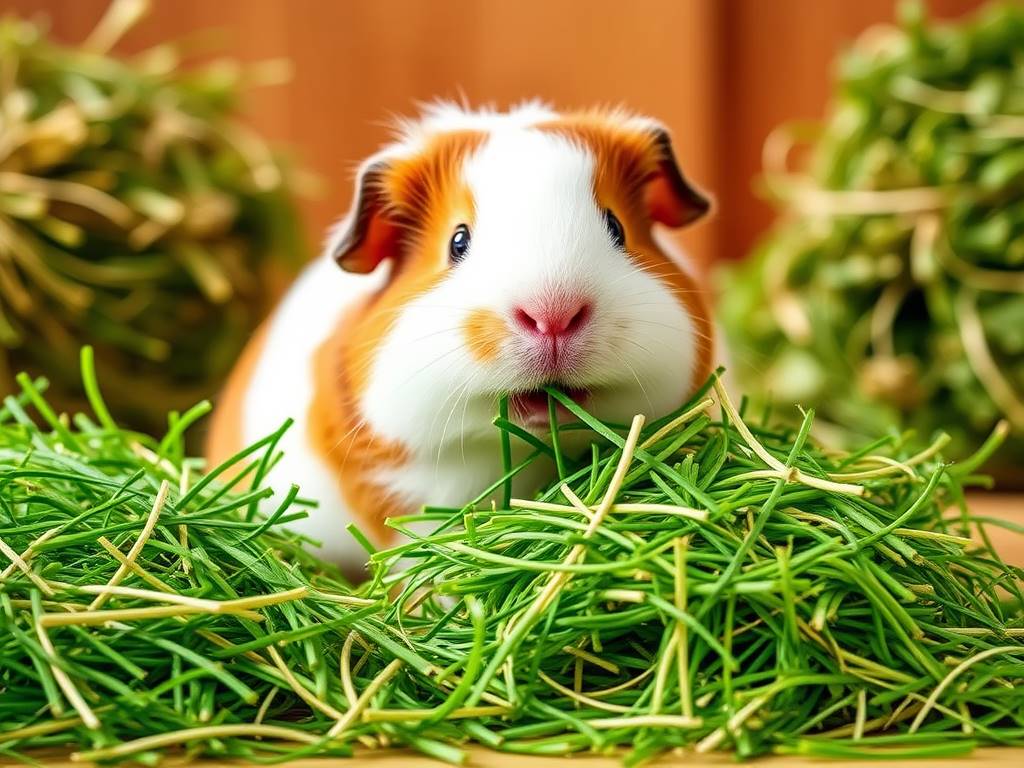
If you share your home with a guinea pig, you already know — hay is their true love! It’s not just something to fill their cage.
Hay is the foundation of a guinea pig’s health: it supports digestion, keeps their teeth healthy, and gives them hours of calm, satisfying chewing time.
But what about alfalfa (or clover) hay? Is it good? Dangerous? When should you use it?
Let’s break it all down so you can offer your little fluffball the best nutrition possible!
Why Hay Is So Important for Guinea Pigs
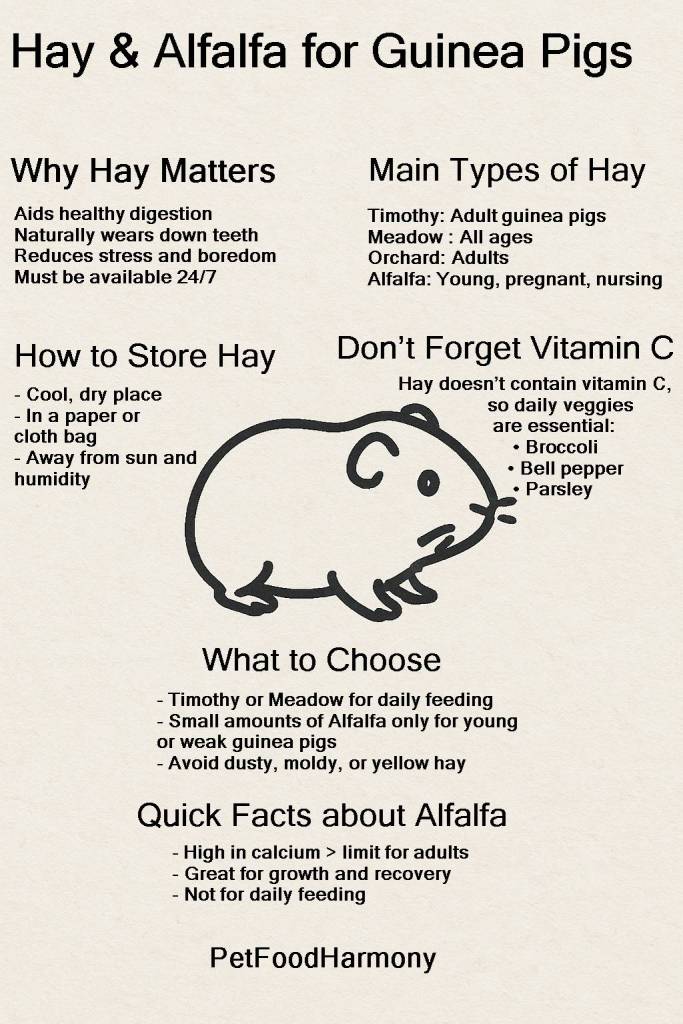
Hay is the heart of your guinea pig’s diet. It should be available at all times, day and night.
The main benefits:
- Digestive health: The fiber in hay keeps their gut moving and prevents blockages.
- Dental care: Guinea pigs’ teeth grow continuously — chewing hay naturally files them down.
- Mental health: Munching hay relieves stress and keeps them busy and happy.
Without hay, guinea pigs can develop dental issues, gut stasis, or even life-threatening digestive problems.
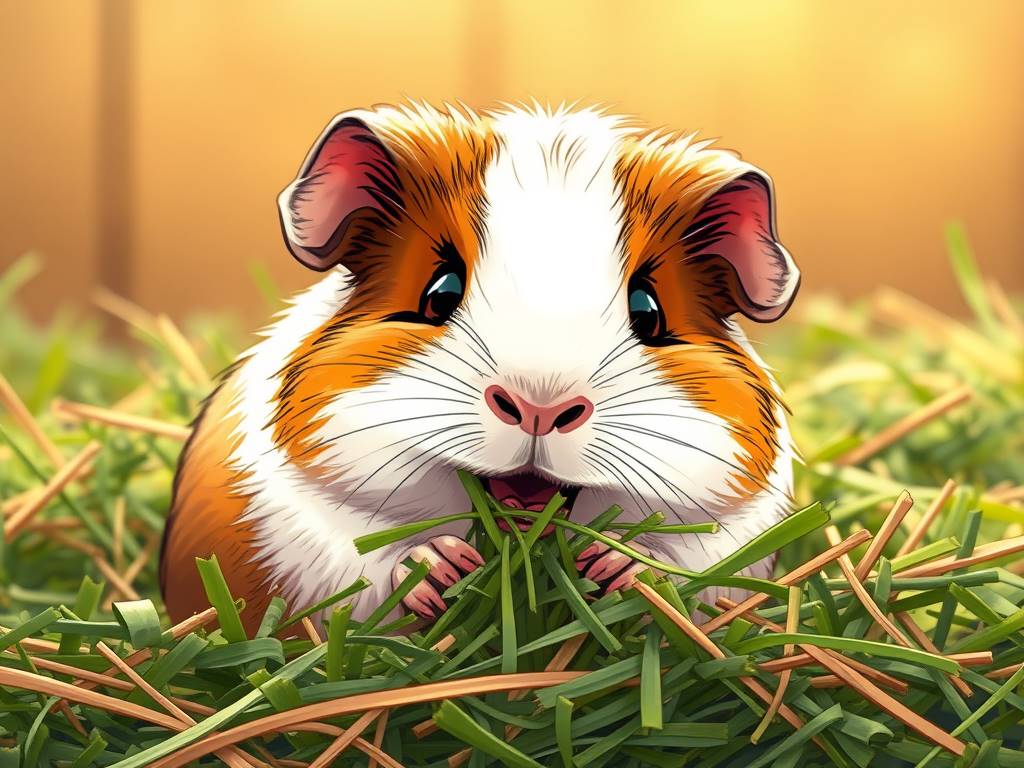
The Best Types of Hay for Guinea Pigs
Not all hay is created equal! Depending on your guinea pig’s age and needs, the right choice can change.
- Grass Hay (Timothy, Orchard, Meadow)
This is the gold standard. It’s high in fiber but low in protein and calcium, making it perfect for adult guinea pigs. It keeps digestion healthy, teeth properly worn, and body weight balanced.
In Greece and Europe, you’ll find brands like Oxbow, Bunny Nature, JR Farm, and Versele-Laga offering Timothy or Meadow hay.
- Alfalfa / Clover Hay (Legume Hay)
Alfalfa and clover are richer in protein, energy, and calcium. They’re ideal for young guinea pigs, pregnant or nursing females, or those who need to gain weight.
For healthy adults, though, avoid daily use — high calcium can lead to bladder stones or kidney problems.
Tip: You can mix a small amount of alfalfa hay (up to 10–20%) with grass hay to boost flavor and nutrients without overdoing it.
- Herbal & Mixed Hays
Blends with herbs or different grasses can be given occasionally for variety. Just make sure there are no unsafe plants (like tomato leaves, rhubarb, or nettles).
PetFoodHarmony Tip: If hay smells musty or dusty, throw it away. Good hay should be greenish, fresh, and fragrant, not yellow or moldy.
What Every Guinea Pig Parent Should Know
- Always provide unlimited hay. Guinea pigs should have free access to hay 24/7.
- Limit alfalfa hay. Use it only when needed — otherwise, stick to Timothy or Meadow hay.
- Store it properly. Keep it away from moisture and sunlight in a breathable paper bag or box.
- Watch for eye injuries. Avoid hay with sharp stems that could hurt your guinea pig’s eyes.
- Balance with fresh veggies. Hay doesn’t contain vitamin C — so add bell peppers, parsley, or romaine lettuce daily.
- Rotate hay types. Switching between Timothy, Orchard, and Meadow hay keeps your guinea pig curious and engaged.

Little Secrets for Big Smiles
- A guinea pig with hay is a happy guinea pig.
- Hay isn’t just food — it’s a lifestyle.
- Don’t think of it as “bedding” — it’s their most important meal!
To keep your guinea pig healthy, energetic, and cheerful:
- Make Timothy or Meadow hay the main part of their diet. Offer alfalfa only occasionally for special needs. Always ensure high-quality, clean, well-stored hay.
- With a little care and a lot of love, your guinea pig will stay bright-eyed, bouncy, and full of joy every day!
Guinea Pig Hay & Alfalfa FAQ
- What is the best hay for guinea pigs?
The best hay for daily feeding is Timothy hay or Meadow hay. They’re high in fiber, low in calcium and protein, and perfect for adult guinea pigs.
- Can guinea pigs eat alfalfa or clover hay?
Yes — but in moderation. Alfalfa and clover are great for young, pregnant, or underweight guinea pigs. For healthy adults, they’re too rich and may cause bladder stones if fed daily.
- How much hay should guinea pigs eat per day?
Unlimited! Guinea pigs need hay available at all times. A good rule of thumb: they should eat roughly their body size in hay every day.
- My guinea pig won’t eat hay. What should I do?
Try:
- A different type of hay (Timothy → Orchard or Meadow).
- A herbal mix for extra aroma.
- Serving it in a hay rack or toy to make it fun.
If your guinea pig still refuses hay, visit a small-animal vet — dental or digestive issues could be the cause.
- What kind of hay should I avoid?
Avoid hay that is:
- Dusty, moldy, or has a bad smell.
- Yellow or over-dried (low in nutrients).
- Contains unknown herbs or sharp stems.
- Pure alfalfa or clover for adult guinea pigs.
- Can I mix different types of hay?
Absolutely! Mixing Timothy + Meadow or Timothy + a little Alfalfa keeps your guinea pig interested and ensures a good nutrient balance. Introduce new hay types gradually to avoid tummy upset.
- Is alfalfa hay toxic to guinea pigs?
No — it’s not toxic. But it’s very rich, which makes it unsuitable as a staple for adults. Think of alfalfa as a supplement, not a daily meal.
- How should I store hay?
Keep hay in a cool, dry place, inside a paper or cardboard box that allows airflow. Avoid plastic bags — they trap moisture and cause mold. If the hay changes smell or color, replace it.
- Does hay contain vitamin C?
No. That’s why guinea pigs need daily vitamin C from fresh veggies (like peppers, parsley, or broccoli) or a dedicated supplement.
- What’s the ideal guinea pig feeding routine?
Hay: Unlimited, 24/7 access.
Fresh veggies: Once or twice a day, rich in vitamin C.
Pellets: Small amount (1–2 tablespoons).
Water: Always fresh and available.
Follow these basics, and you’ll have a happy, healthy little friend!


Θα χαρώ να διαβάσω τα σχόλιά σας