
The Importance of a Consistent Feeding Routine
A healthy adult dog needs more than just the right food — consistency is key. Just like humans, dogs feel calmer and more balanced when they have a predictable daily routine.
Keeping regular meal times helps their body function properly, reduces anxiety, and keeps their weight stable.
At PetFoodHarmony, we believe that a dog’s daily rhythm — meals, walks, and rest — is the foundation of long-term wellness and happiness.
How Many Times a Day Should a Dog Eat?
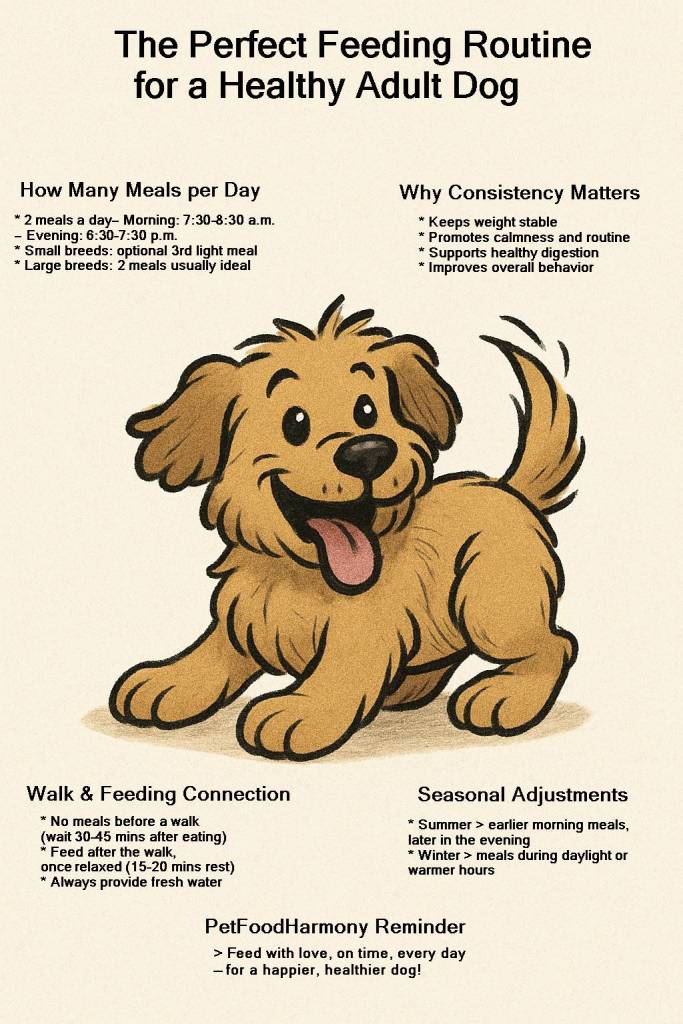
For most adult dogs, two meals a day is ideal:
- One in the morning, around 7:30–8:30 a.m.,
- And one in the evening, around 6:30–7:30 p.m.
This schedule keeps energy levels stable and avoids overloading the digestive system with a single large meal.
Small-breed dogs with fast metabolisms may benefit from a small third meal, while large breeds usually do well with two.
The most important thing is consistency — once your dog knows when to expect food, their body naturally adjusts and digests better.
The Connection Between Walks and Mealtime
Walks play a major role in your dog’s physical and mental health — and they’re closely related to feeding times.
Here are a few key tips:
- Avoid feeding your dog right before a walk. Wait at least 30–45 minutes after a meal to prevent indigestion or, in large breeds, gastric torsion.
- Feed your dog after the walk, allowing a 15–20 minute cool-down period first.This gives the body time to recover and ensures smoother digestion.
Many dogs also find food more enjoyable after a good walk — exercise stimulates appetite and makes mealtime a moment of joy.
Why Consistent Meal Times Matter
Keeping a regular feeding schedule supports:
- Digestive health: The body learns when to expect food, reducing bloating or discomfort.
- Emotional balance: Routine builds confidence and calmness.
- Weight management: Less risk of overeating or obesity.
- Better behavior: Fewer food-related anxieties, less begging or scavenging.
Plus, when you know your dog’s mealtime rhythm, it’s easier to plan walks and bathroom breaks throughout the day.
What to Watch for During Feeding
- Keep the environment quiet and calm during meals.
- Always provide fresh water nearby.
- Avoid giving table scraps or fatty, salty human foods.
- Don’t allow strenuous exercise right before or after eating.
- When switching foods, introduce the new diet gradually over 7–10 days.
How Lifestyle Affects Feeding Times
If your dog stays home alone for long hours, you can use an automatic feeder or adjust feeding times around your schedule.
In the summer, it’s best to feed earlier in the morning and later in the evening to avoid heat discomfort.
Every season may require small adjustments — but consistency should always remain the core principle.

Expert Advice
Every dog is unique. The ideal feeding schedule can vary based on breed, age, energy level, and diet type.
A veterinarian or pet nutritionist can help determine the right portion sizes and timing for your dog’s specific needs.
At PetFoodHarmony, we believe that feeding is an act of love — and consistency is how you show you care.
FAQ – Frequently Asked Questions About Dog Feeding Times
- How many times a day should I feed my adult dog?
Most adult dogs do best with two meals a day — morning and evening. Small or very active dogs may need a small third meal.
- Can I feed my dog only once a day?
It’s not recommended. Two smaller meals promote better digestion and steadier energy levels.
- Should my dog eat before or after a walk?
After. Always wait 15–20 minutes post-walk before feeding, and never feed right before vigorous exercise.
- What if I need to change feeding times?
Adjust gradually — shift meal times by a few minutes each day to help your dog adapt smoothly.
- How do I know if my dog is eating enough?
Watch for signs of good health: consistent energy, stable weight, shiny coat, and normal stool. These indicate a balanced diet and correct portions.
A consistent feeding routine isn’t just about convenience — it’s a reflection of love, structure, and respect for your dog’s natural rhythm.
With a bit of planning and care, mealtime and walk time can become the happiest parts of your dog’s day — filled with harmony, balance, and tail wags.


Θα χαρώ να διαβάσω τα σχόλιά σας