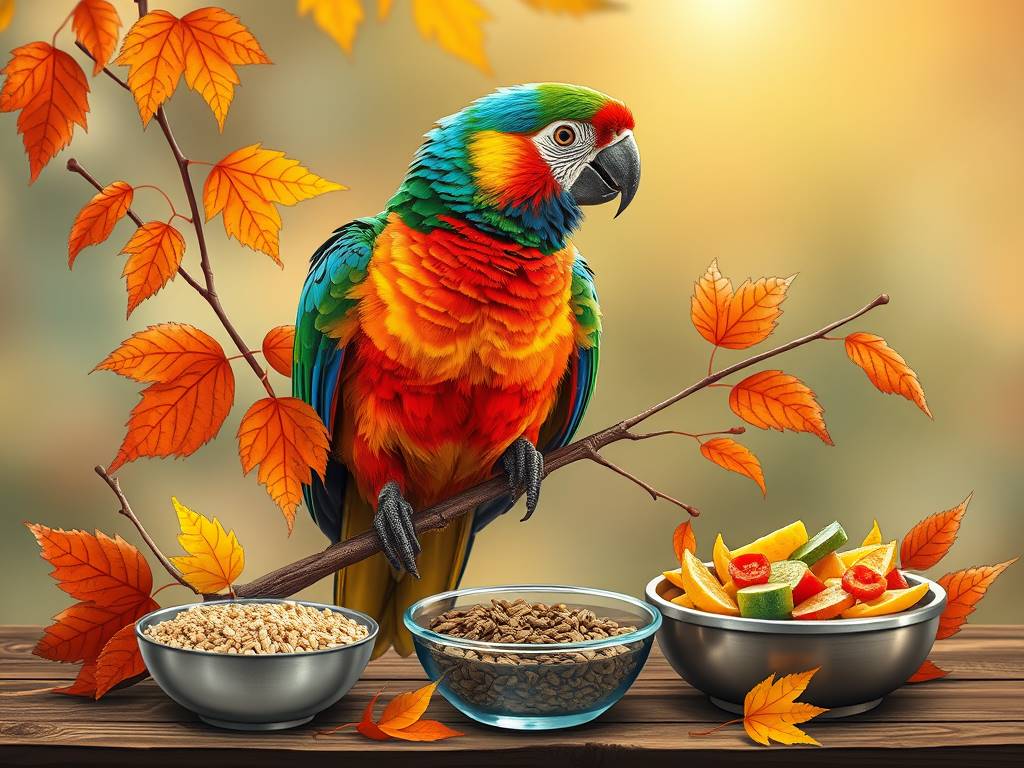
Give your parrot the strength, shine, and balance they need this fall!
Autumn brings change — in the air, in light, and in mood. Our feathered friends feel it too!
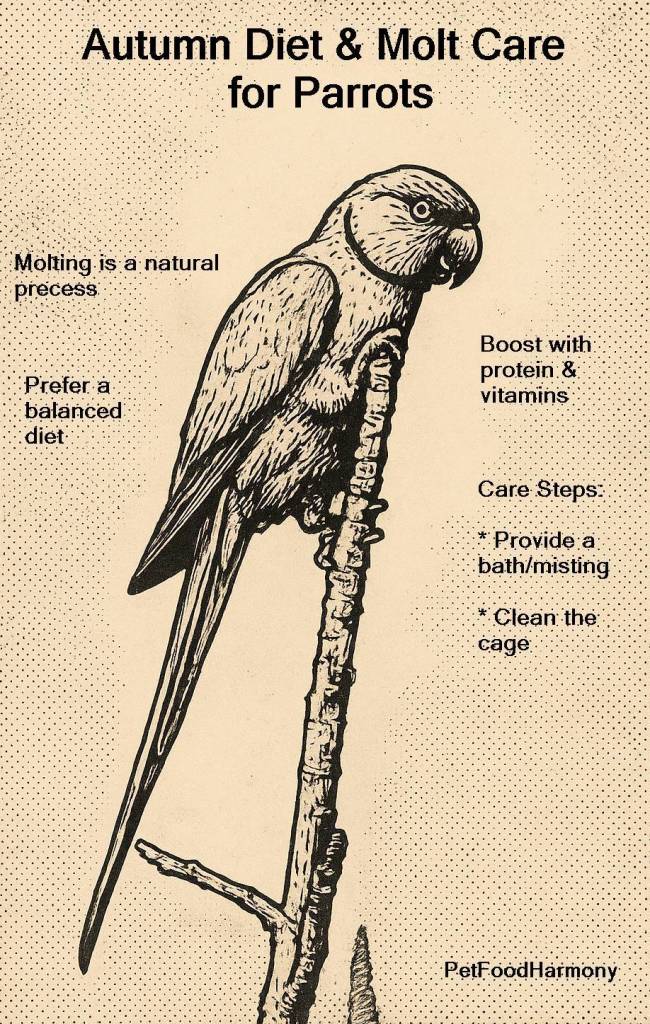
For many parrots, this is molting season, when old feathers fall out and are replaced with new, vibrant ones. Molting is completely natural, but it demands extra energy, balanced nutrition, and gentle care.
With the right diet, your parrot will stay strong, comfortable, and full of life during this renewal period.
Core Diet
- Pellets (60–70%) – A balanced foundation for daily nutrition.
- Seeds (20–30%) – millet, flaxseed, and a few sunflower seeds for healthy fats.
- Fresh vegetables & fruits (20–30%) – Carrot, bell pepper, broccoli, spinach, sweet potato Apple, pear, tangerine (always seedless).
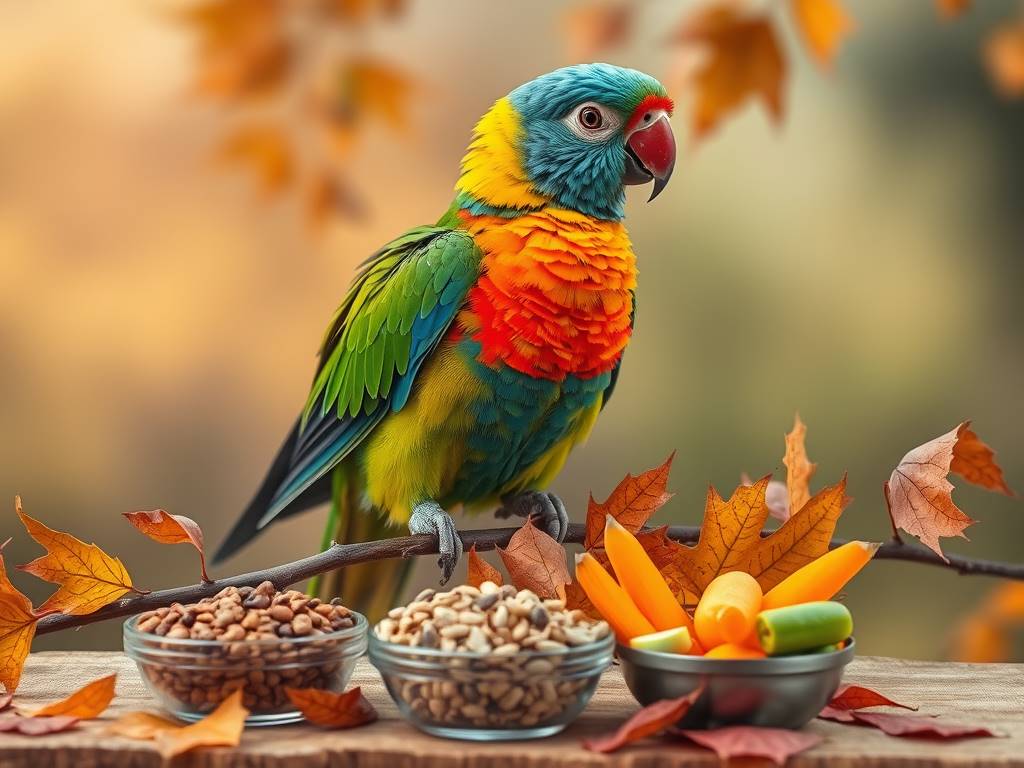
Protein & Energy for New Feathers
During molting, your parrot’s body needs extra protein to build new feathers:
- Offer half a boiled egg or egg food once or twice a week.
- Quinoa, lentils, and chickpeas – cooked simply, with no salt, oil, or spices. Serve 1–2 times per week, alone or mixed with chopped veggies.
- Sprouted legumes (sprouts) – an even more natural option, rich in enzymes and nutrients.
Supplements That Support Feather Health
- Biotin & Methionine → Strengthen and protect growing feathers.
- Vitamin A → Promotes healthy skin and rich feather color.
- Vitamin D3 & Calcium → Support metabolism and bone health.
Always use supplements under avian vet guidance or according to product instructions.
Hydration & General Care
- Provide fresh water daily (change it daily if you add vitamins).
- Encourage gentle misting or baths 2–3 times per week to soften new feathers.
- Clean the cage regularly, as fallen feathers collect dust.
- Keep the environment calm, warm, and free of drafts.
Little Details That Make a Big Difference
Molting is a natural renewal phase. If your parrot eats well, drinks water, and stays active, everything is fine. But if you notice bald spots, sores, or excessive feather loss, contact your avian veterinarian.
Autumn is the perfect time for rejuvenation — for both nature and our parrots. With the right nutrition, care, and a little love, your feathered companion will soon have radiant plumage and a cheerful, healthy spirit ready for winter.
Frequently Asked Questions (FAQ)
- My parrot is losing a lot of feathers — is that normal?
Yes! It’s completely normal during seasonal molting. New feathers (pin feathers) will start to appear within a few weeks.
- Can I feed raw chickpeas or lentils?
No. Always serve cooked or sprouted legumes — never raw — as raw beans contain natural substances that hinder digestion.
- How often can I give egg to my parrot?
Once or twice a week is perfect. Eggs provide valuable protein and vitamin D, supporting feather and overall health.
- My parrot refuses vegetables. What can I do?
Try finely chopping them or mixing them with favorite seeds. Patience, color, and variety make a big difference!
Every parrot deserves love, natural nutrition, and gentle care. With small daily choices, you can help your bird live a life full of health, balance, and harmony.


Θα χαρώ να διαβάσω τα σχόλιά σας