Here we care deeply about real knowledge, gentle guidance and plenty of love for our tiny whiskered friends.
Today we’re diving into a very important topic: the hidden dangerous ingredients often found in commercial hamster mixes, and how to spot them before they end up in your hamster’s bowl.
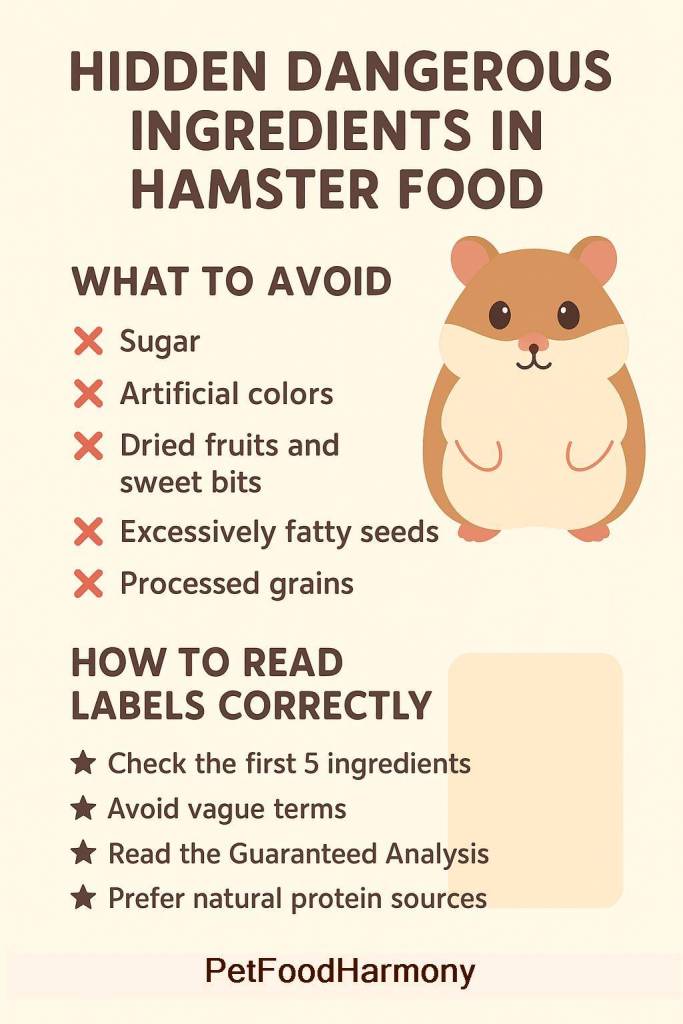
- Sugar and Its “Hidden” Forms
If you see words like glucose, dextrose, syrup, molasses, honey, you are looking at added sugar.
Too much sugar can lead to obesity, diabetes and dental issues — especially in dwarf hamsters.
- Artificial Colors
Brightly colored pieces are not “vitamins” — they are usually artificial dyes like E129, E102, E110.
They offer no nutritional value and can trigger allergies.
- Dried Fruits and Sweet Bits
Raisins, banana chips and yogurt drops are tasty but extremely high in sugar.
They cause glucose spikes and unbalanced nutrition.
- Excessively Fatty Seeds
Sunflower seeds, pumpkin seeds and nuts are healthy in small amounts but many mixes contain far too many, leading to weight gain.
- Processed Grains
Extruded cereals or puffed grain pieces have low nutritional value and a high starch content.
- Low-quality Meat By-products
Labels like “animal derivatives” or “meat meal” without specifying the species can hide poor-quality animal leftovers.
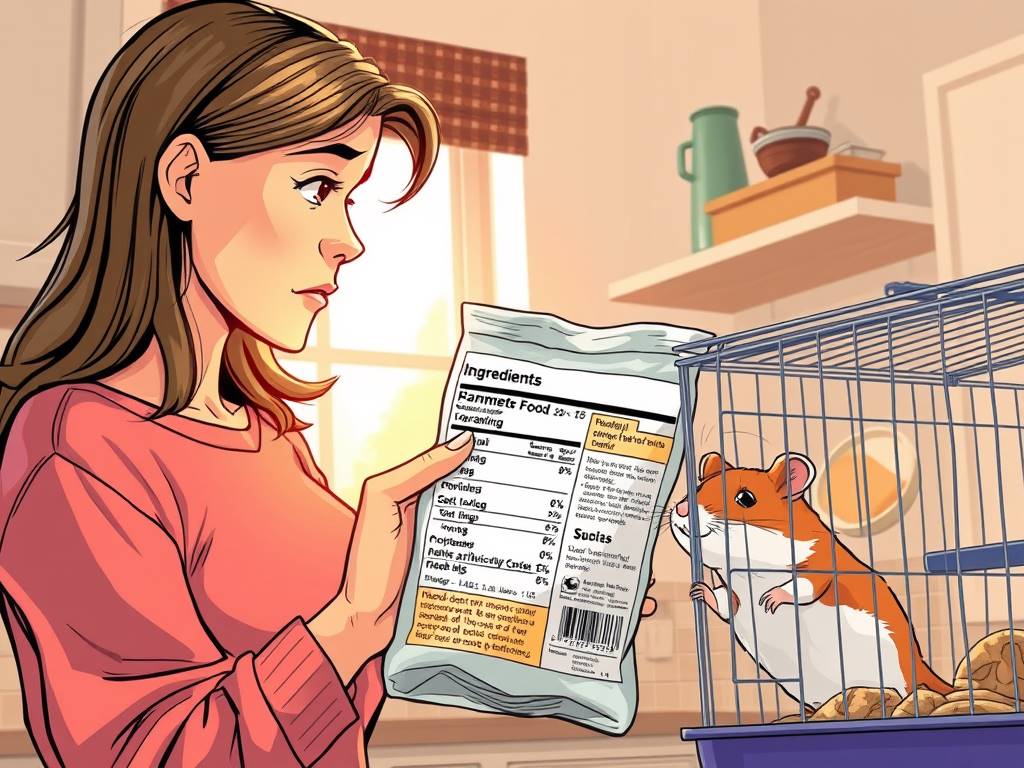
How to Read Labels Correctly
- Check the first 5 ingredients
They represent the majority of the food.
- Avoid vague terms
Such as cereals, derivatives, animal products. Look for specific names.
- Read the Guaranteed Analysis
Protein, fat and fiber levels show the quality of the formula.
- Prefer natural protein sources
Dried insects are much better than unspecified meat meals.
What to Look For in a High-Quality Hamster Food
- Balanced mix of seeds & grains
- No added sugar or artificial colors
- Natural protein sources (mealworms, shrimp, insects)
- Herbs & vegetables without excess sweetness
- Reasonable fat levels to avoid obesity
FAQ – Frequently Asked Questions About Hamster Food
- Are dried fruits bad for hamsters?
- Not poisonous, but very high in sugar.
- For dwarf hamsters: avoid completely.
- For Syrian hamsters: give rarely and in tiny amounts.
- Are the colorful bits harmful?
Yes. They are usually artificial dyes with no nutritional value.
Choose mixes without colored extruded pieces.
- Do hamsters need animal protein?
Yes! In nature, they eat insects. A good food should contain dried insects or a clean, identifiable animal protein source.
- Should I feed only pellets?
Pellets ensure balanced nutrients but hamsters also need variety for natural foraging behavior.
Ideal: mix + a small portion of pellets.
- What protein percentage is ideal?
Generally 14–18% for adult hamsters.
Young hamsters may need slightly more.
- How do I know if a food is too fatty?
If the top ingredients include many sunflower seeds, nuts or high-fat seeds, it is likely too rich.
- Can I make my own hamster food?
You can, but it requires good knowledge of ratios and ingredients.
For beginners, a high-quality commercial mix is safer.


Θα χαρώ να διαβάσω τα σχόλιά σας