
A healthy fish starts with the right food — and more importantly, with the right nutrients.
From bright tropical species to calm bottom dwellers, every fish needs a balanced diet that meets its natural requirements.
In this guide, we’ll go through the five most important nutrients every fish needs for strong growth, vibrant color, and long-lasting health.
- Proteins – The Building Blocks of Life
Proteins are the foundation of any fish diet. They help build muscles, repair tissues, and boost the immune system.
How much protein do fish need?
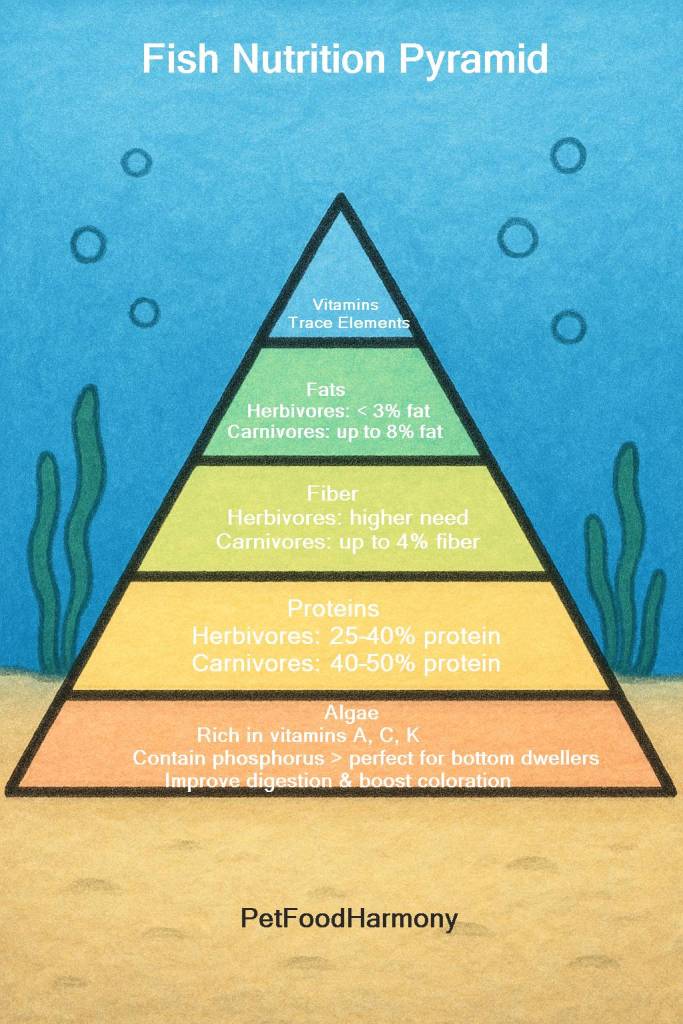
- Herbivores: 25–40% protein
- Carnivores: 40–50% protein
- Omnivores: somewhere in between, depending on species
Why proteins matter
- support growth and muscle development
- strengthen immunity
- enhance energy and natural coloration
Good protein sources include plankton, shrimp, bloodworms, small crustaceans, and high-quality pellets or frozen foods.
- Algae – Nature’s Green Superfood
Algae are one of the most valuable ingredients in a balanced fish diet. They’re rich in vitamins, minerals, and antioxidants — and easy to digest.
Benefits of algae
- rich in vitamins A, C, and K
- provide essential minerals and trace elements
- boost color and vitality
- aid digestion naturally
Perfect for bottom-dwelling fish (like plecos and corydoras) thanks to their phosphorus content, which supports bone health and metabolism.
Common types: spirulina, nori, and dried algae flakes or pellets.
- Vitamins – Small but Powerful
Vitamins are tiny nutrients with huge importance for fish health.
Essential vitamins for fish
- A: supports growth and vision
- C: boosts immune defense
- D: helps absorb calcium
- E: antioxidant protection for cells
- B-complex: energy and metabolism
- K: essential for blood clotting and healthy circulation
You’ll find these in quality commercial foods, algae-based feeds, or liquid vitamin supplements.

- Fats – Necessary but Dangerous in Excess
Fats provide concentrated energy and are vital for cell health — but too much fat can harm your fish.
Why fat levels matter
Excess fat can lead to:
- liver damage
- heart problems
- reduced lifespan
- higher disease risk
Safe fat levels
- Herbivores: less than 3% fat
- Carnivores: up to 8% fat
- Omnivores: moderate levels, depending on species
Choose foods with balanced, high-quality fats from marine sources.
- Fiber – The Key to Good Digestion
Fiber plays an essential role in keeping the digestive system healthy and preventing constipation.
Benefits of fiber
- supports digestion and nutrient absorption
- keeps the gut active and balanced
- prevents bloating and digestive stress
How much fiber is enough?
- Herbivores: higher fiber intake
- Carnivores: up to 4% fiber
- Omnivores: moderate amounts
Fiber usually comes from algae and plant-based ingredients — perfectly safe and easy to digest.
The perfect fish diet isn’t about a single food type — it’s about balance. By combining the right amounts of protein, algae, vitamins, fats, and fiber, you’ll give your fish the nutrients they need to stay healthy, colorful, and full of life.
A well-fed fish is a happy fish — and that’s the harmony every aquarist dreams of.

FAQ – Frequently Asked Questions
- How often should I feed my fish?
Once or twice a day is enough. Only feed what they can eat within 1–2 minutes to avoid overfeeding.
- How can I tell if fish food has enough protein?
Check the label! High-quality foods clearly state their protein percentage.
- Can I feed only flakes?
Yes, but it’s better to rotate between flakes, pellets, and frozen foods for a balanced diet.
- Are algae necessary for all fish?
They’re essential for herbivores and bottom dwellers, and beneficial (but not mandatory) for carnivores.
- What if my fish has a bloated belly?
It’s usually related to digestion. Reduce feeding, add more fiber-rich or algae-based foods, and monitor water quality.


Θα χαρώ να διαβάσω τα σχόλιά σας