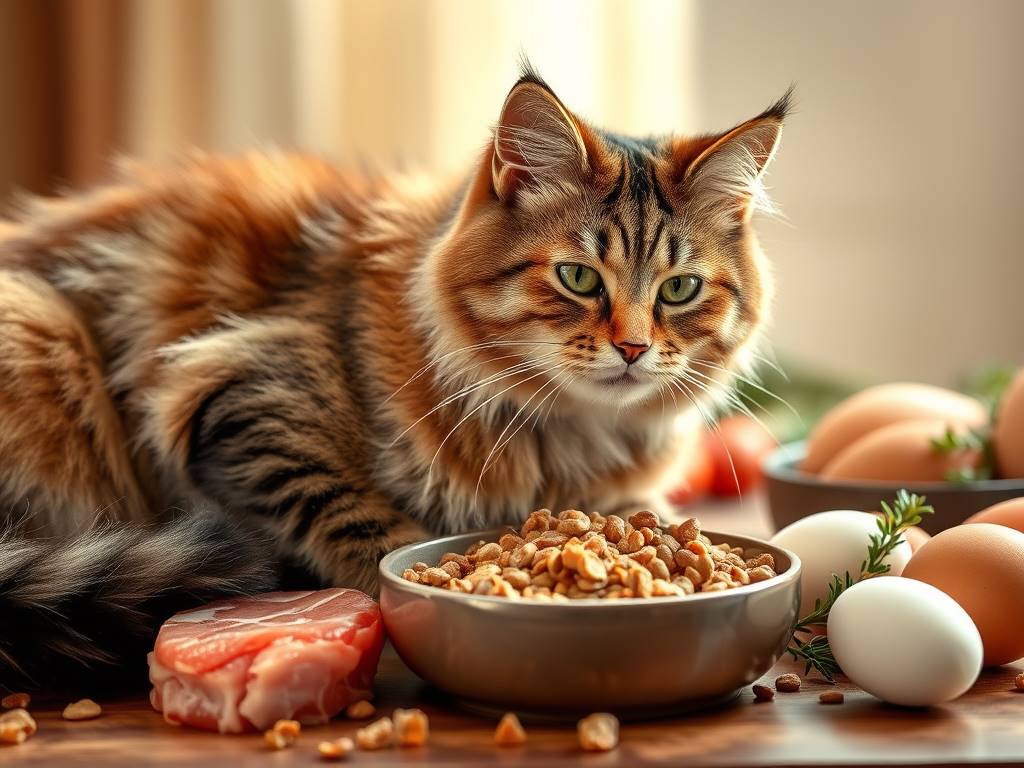
Adult cats are obligate carnivores. Their bodies are designed to get energy, essential amino acids, and vital nutrients from animal-based protein.
The right quality and amount of protein in their diet isn’t a luxury — it’s absolutely essential for their strength, well-being, and long, healthy life.
Why is protein so important for cats?
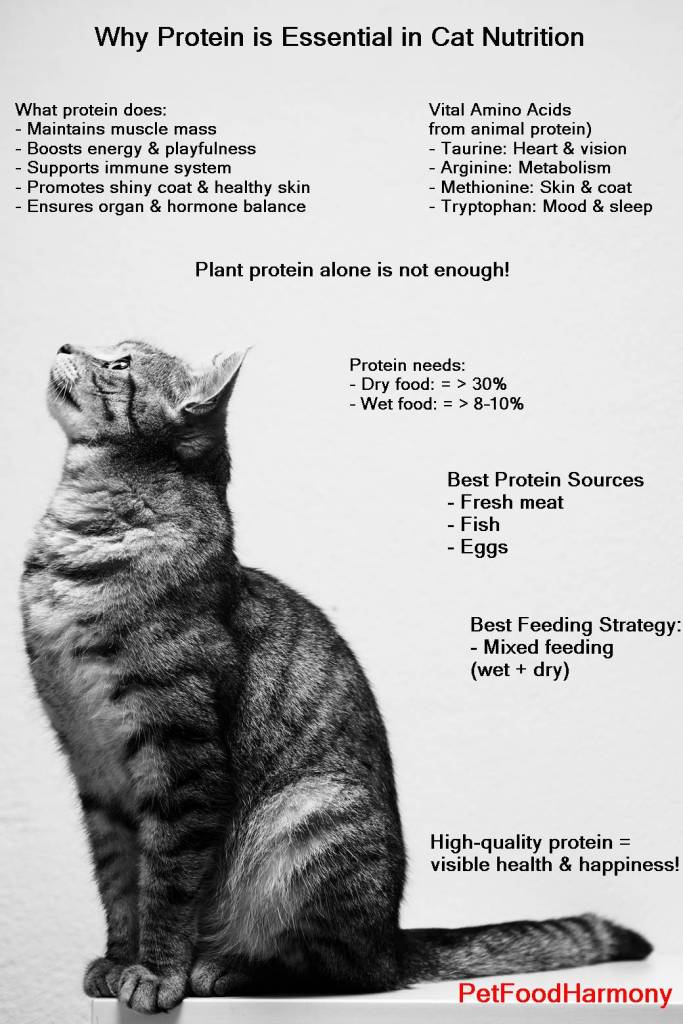
Protein supports:
- Strong muscles & mobility
- Energy for playful zoomies and couch-to-ceiling acrobatics
- A healthy immune system and antibody production
- Shiny fur & healthy skin
- Proper organ function and enzyme production
- Hormonal balance
Protein deficiency may show up as hair loss, weakness, weight or muscle loss, and low appetite.
The magic of animal protein:
- Amino acids
- Cats need certain amino acids only found in animal protein:
Amino Acid Role
- Taurine Heart, vision, reproduction
- Arginine Metabolism, ammonia detoxification
- Methionine & Cysteine Skin and coat health
- Tryptophan Mood and sleep support
Plant protein alone is not enough for cats.
Best sources of high-quality protein in cat food
Look for:
- Fresh meat such as chicken, turkey, beef, lamb
- Fish like salmon and tuna (in moderation)
- Eggs
What to check on the label:
- Better quality
- “Fresh meat”
- “Animal protein”
- “High-quality meat meal”
Less ideal
- “Animal derivatives”
- “By-products” (without specifying the source)
How much protein does an adult cat need?
In a balanced diet:
≥ 30% crude protein in dry cat food
≥ 8–10% in wet food (lower because of high moisture)
Active cats – and neutered cats – often benefit from higher protein under proper guidance.
Wet vs Dry Cat Food: Who wins on protein?
- Dry food is usually more concentrated in protein
- Wet food supports hydration and often uses more visible animal ingredients
For most cats, the best formula is a mixed feeding plan!
What about too much protein?
Healthy cats generally tolerate and utilize protein very well. Exception: chronic kidney disease. In that case, diet must be adapted with veterinary supervision.
How to choose the right food on the shelf
- Animal protein as the first ingredient
- Clear source labeling (“chicken,” not “poultry derivatives”)
- Appropriate protein percentage
- Good digestibility — avoid excessive fillers
Great protein in the bowl = shiny coat, strong muscles, playful spirit, and a happy kitty cuddling by your side.
FAQ – Frequently Asked Questions
- Is taurine necessary in cat food?
Absolutely. Cats cannot produce enough taurine on their own — it must come from their food.
- Can I feed my cat dog food?
No! Dog food doesn’t contain enough protein and taurine for feline needs.
- How can I tell if protein is high quality?
If a named animal protein appears first on the ingredient list and the source is clearly defined.
- Is plant-based protein enough for cats?
No. Cats require animal protein to meet essential amino acid needs.


Θα χαρώ να διαβάσω τα σχόλιά σας