
The goldfinch is a sensitive and highly active songbird with specific nutritional needs. Choosing the right diet directly affects its health, feather quality, vitality, and song.
In this article, we explore what a goldfinch truly needs, which ingredients high‑quality commercial foods should contain, the most common feeding mistakes, and how to avoid them.
Why Nutrition Is Crucial for Goldfinches
In the wild, goldfinches feed on a wide variety of seeds and plant materials. In captivity, however, their diet depends entirely on us.
A balanced and well‑designed diet contributes to:
- a strong immune system
- clear, strong singing
- healthy, vibrant plumage
- proper molting
On the other hand, poor‑quality or monotonous feeding can lead to liver problems, weakness, and reduced vitality.

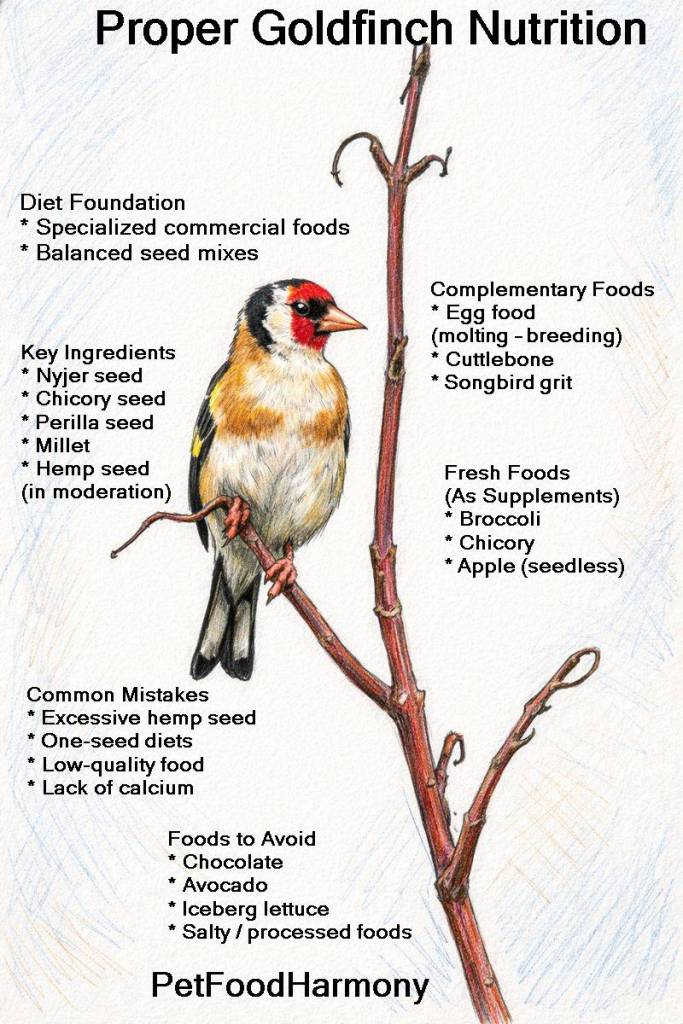
Commercial Foods: The Safest Dietary Foundation
Specialized commercial foods for goldfinches are the safest and most practical option for daily feeding, as they are formulated to meet the bird’s nutritional requirements.
What a High‑Quality Seed Mix Should Contain
A well‑balanced commercial seed mix typically includes:
- Nyjer seed: a staple for goldfinches, rich in energy
- Chicory seed: supports healthy digestion
- Perilla seed: highly nutritious and beneficial
- Millet: light and easy to digest
- Hemp seed in controlled amounts, to prevent excessive fat intake and liver stress
Correct proportions are more important than quantity. Quality commercial foods are designed to provide balance without excess.
Complementary Commercial Foods
Beyond seed mixes, additional ready‑made foods play an important role in goldfinch nutrition.
Egg Food
Egg food is especially important:
- during molting periods
- throughout the breeding season
- during recovery or stress
It should be specifically formulated for songbirds and contain high‑quality proteins.
Mineral Supplements
- Cuttlebone
- Grit formulated for songbirds
These support bone health and proper digestive function.
Fresh Foods: Only as a Supplement
Fresh foods can be offered as a supplement and in small amounts:
- vegetables such as broccoli, chicory, and endive
- fruits such as apple (without seeds)
They should never replace a complete and balanced commercial diet.
Common Feeding Mistakes in Goldfinches
Many health problems arise from improper feeding practices, including:
- excessive hemp seed consumption
- feeding only one type of seed
- use of low‑quality commercial foods
- offering unsuitable foods (salty or processed items)
- lack of calcium and mineral supplementation
Avoiding these mistakes is essential for long‑term health and longevity.
Foods to Avoid
- Chocolate
- Avocado
- Iceberg lettuce
- Salty or sugary foods
Even small amounts of these foods can cause serious health issues.
Frequently Asked Questions (FAQ)
- How often should a goldfinch eat?
Food should be available daily, refreshed regularly, with attention to proper portion control.
- Is egg food necessary all year round?
No. Egg food is mainly recommended during molting, breeding, and recovery periods.
- Can I prepare homemade food for my goldfinch?
Homemade food may be offered occasionally, but it cannot replace a complete and balanced commercial diet.
- How can I tell if my goldfinch’s diet is inadequate?
Dull feathers, reduced singing, lethargy, or changes in droppings are common warning signs.
Proper goldfinch nutrition is based on quality, balance, and consistency. Specialized commercial foods, combined with attentive care, form the foundation for a healthy, active, and happy bird.

Θα χαρώ να διαβάσω τα σχόλιά σας