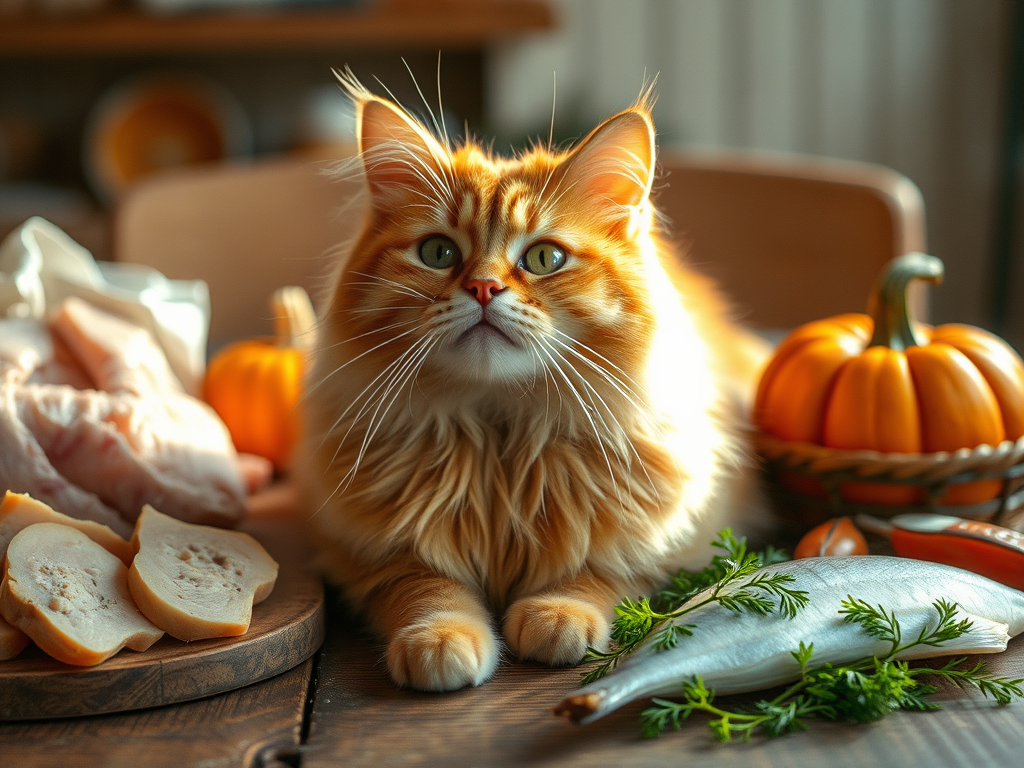
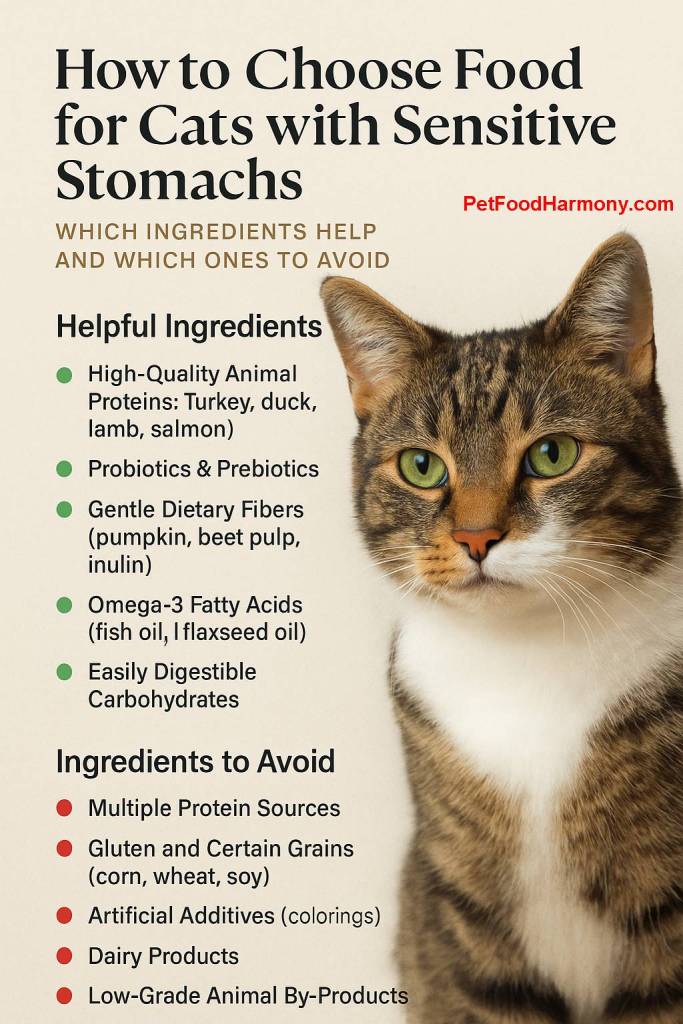
Which ingredients help and which ones to avoid
Cats with sensitive stomachs often show symptoms like vomiting, diarrhea, bloating, loss of appetite, or excessive hair ingestion. The right diet can significantly improve their condition.
Below, we’ll explore what to look for, which ingredients help, and which to avoid.

- Food allergies or intolerances (e.g., chicken, dairy, or grains)
- Sudden diet changes
- Low-quality food with artificial additives
- Hairball ingestion due to excessive grooming
- Chronic gastrointestinal issues (e.g., IBD)

1. High-quality animal proteins
- Sources: turkey, duck, lamb, fish (e.g., salmon)
- Ideal forms: hydrolyzed proteins or single-protein recipes
2. Probiotics & prebiotics
- Help balance gut flora
Examples: Enterococcus faecium, Lactobacillus acidophilus
3. Gentle dietary fibers
- Sources: pumpkin, beet pulp, inulin
Regulate digestion and reduce diarrhea
4. Omega-3 fatty acids
- Sources: fish oil, flaxseed oil
- Help reduce intestinal inflammation
5. Easily digestible carbohydrates
- Examples: rice, potatoes, sweet potatoes

1. Multiple protein sources or hidden allergens
2. Gluten and certain grains (in some cats):
- Corn, wheat, soy – harder to digest and potentially allergenic
3. Artificial additives:
- Preservatives (e.g., BHA, BHT), colorings, and flavor enhancers
4. Dairy products:
Many cats are lactose intolerant
5. Low-grade animal by-products:
Unspecified meat meals or fats that are difficult to digest


> 
- An elimination diet to identify allergens
- Prescription diets with hydrolyzed proteins or special formulations
- Choosing the wrong «specialty» food may mask symptoms instead of solving them.

Transition to the new food gradually over at least 7 days
- Stick to a consistent feeding schedule
- Avoid overfeeding treats or snacks
- Consult a vet or feline nutritionist if symptoms persist
#CatNutrition, #SensitiveStomach, #CatCare, #HealthyCats, #GrainFreeCatFood


Θα χαρώ να διαβάσω τα σχόλιά σας