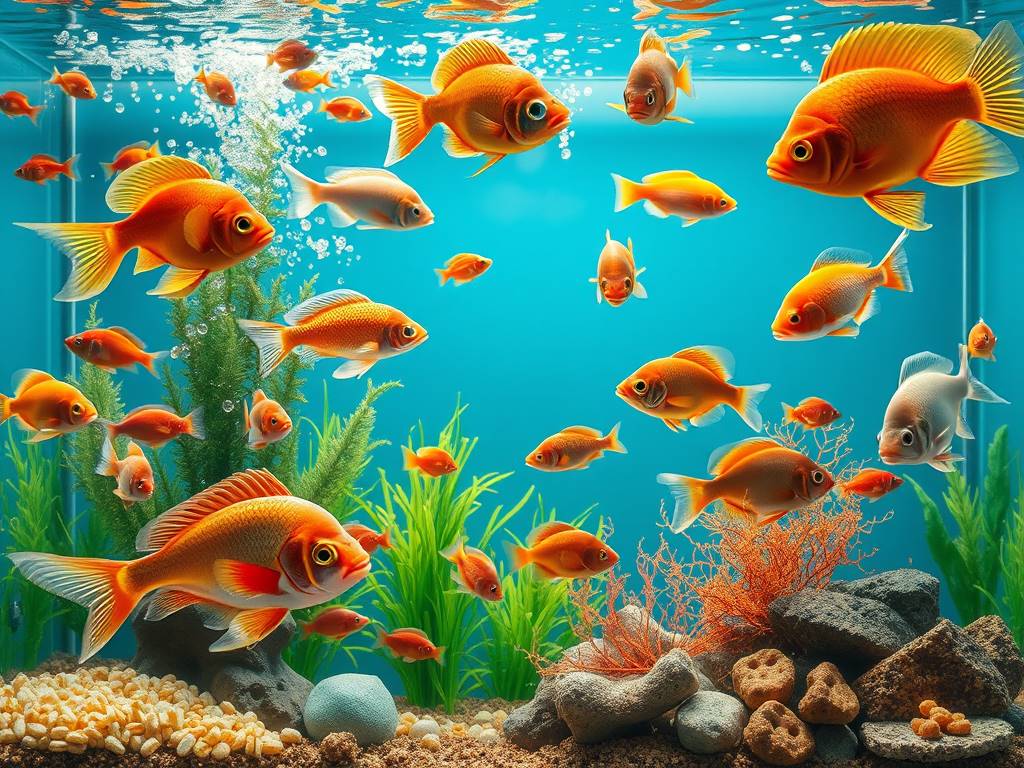
We’ve all done it.
We stand in front of the aquarium. The fish swim closer to the glass. We shake the food container, and suddenly they become more active.
“They’re hungry,” we think.
So we sprinkle a little more.
But proper fish nutrition isn’t based on emotion — it’s based on knowledge.
Let’s explore the five most common feeding mistakes aquarium owners make.
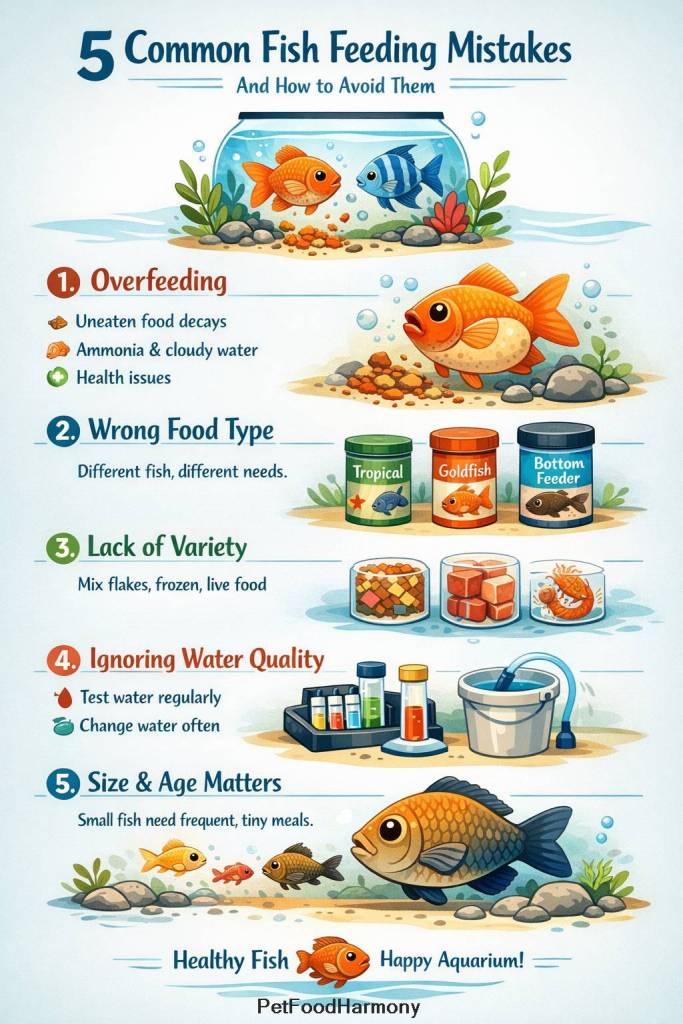
- “Just a Little More Won’t Hurt” – Overfeeding
Overfeeding is the most common mistake in aquarium fish care.
Fish don’t have a clear satiety response the way we expect. Many species will continue eating even when it’s harmful.
What happens when you overfeed?
- Uneaten food decays
- Ammonia levels rise
- Water becomes cloudy
- Disease risk increases
Ideally, food should be completely consumed within 1–2 minutes.
- Not All Fish Eat the Same Food
One of the most common fish care mistakes is using one generic food for every species.
- Goldfish have different dietary needs than tropical fish.
- Bottom dwellers require sinking food.
- Cichlids often need higher protein content.
Choosing the right aquarium fish food directly affects:
- Growth
- Color vibrancy
- Immune strength
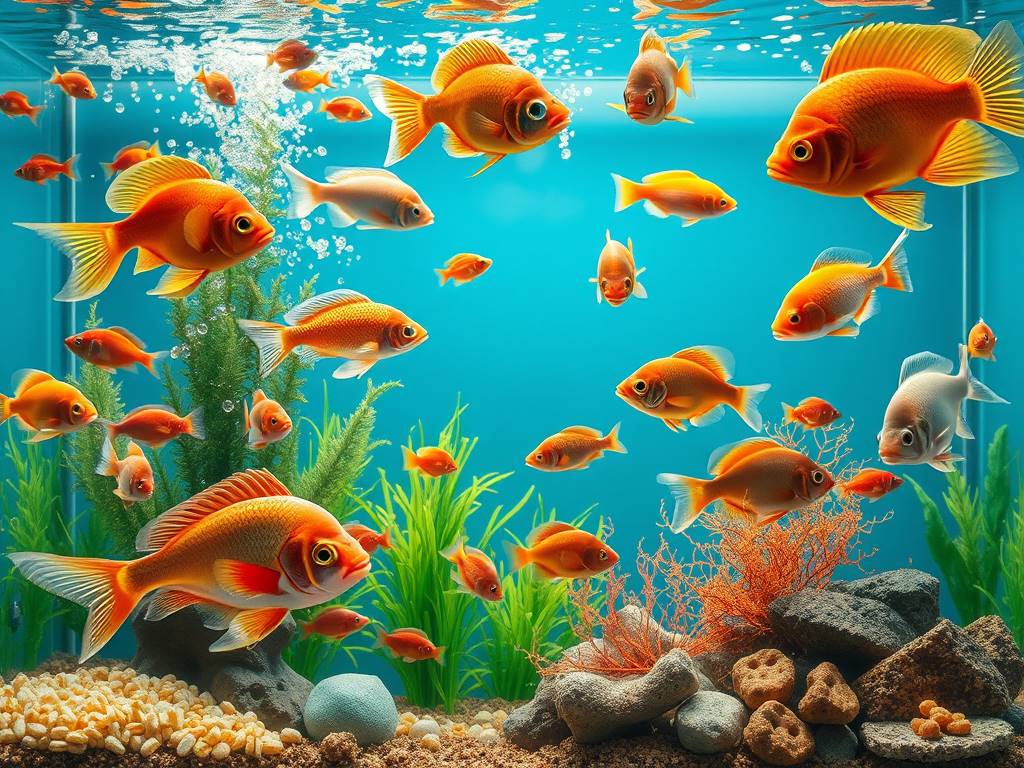
- The Problem with a Monotonous Diet
Feeding the same flakes every day for months can lead to nutritional deficiencies.
Just like us, fish benefit from variety:
- Dry food (flakes or pellets)
- Frozen food (brine shrimp, bloodworms)
- Plant-based supplements (like spirulina)
Rotating food types supports vitality and reduces deficiency risks.
- “The Water Looks Clear, So It Must Be Fine” – A Common Myth
Fish nutrition and water quality are directly connected.
Even if the water looks clean:
- Ammonia may be elevated
- Nitrate levels may be high
- The filtration system may be under stress
Proper fish care includes:
- Regular water changes
- Monitoring water parameters
- Maintaining the filter system
5. Juveniles Are Not Just “Smaller Adults”
Young fish have very different nutritional needs.
They require:
- More frequent feedings
- Smaller food particle sizes
- Higher nutrient density
Adult fish need stability and balance.
Adjusting feeding based on life stage is essential for long-term health.
Feeding your fish isn’t just about sprinkling food into the tank.
It’s about observation. Balance. Prevention.
By avoiding these common mistakes, you:
- Reduce disease risk
- Maintain cleaner water
- Extend your fish’s lifespan
- Enjoy brighter, more active aquarium life
Healthy fish begin with informed feeding.
FAQ – Fish Feeding & Aquarium Nutrition
- How often should I feed my fish?
For most species, 1–2 times per day is sufficient. Feed small portions that are consumed within 1–2 minutes.
- Should I fast my fish once a week?
Yes. One fasting day per week can support digestive health for many species.
- Are flakes or pellets better?
It depends on the species. Pellets are often more nutrient-dense and stable in water, while surface-feeding fish may prefer flakes.
- Can I feed only frozen food?
Not exclusively. A varied diet ensures complete nutritional coverage.
- How do I know if I’m overfeeding?
If food regularly sinks uneaten or the water becomes cloudy, you are likely feeding too much.


Αφήστε απάντηση στον/στην pk 🌎 Ακύρωση απάντησης