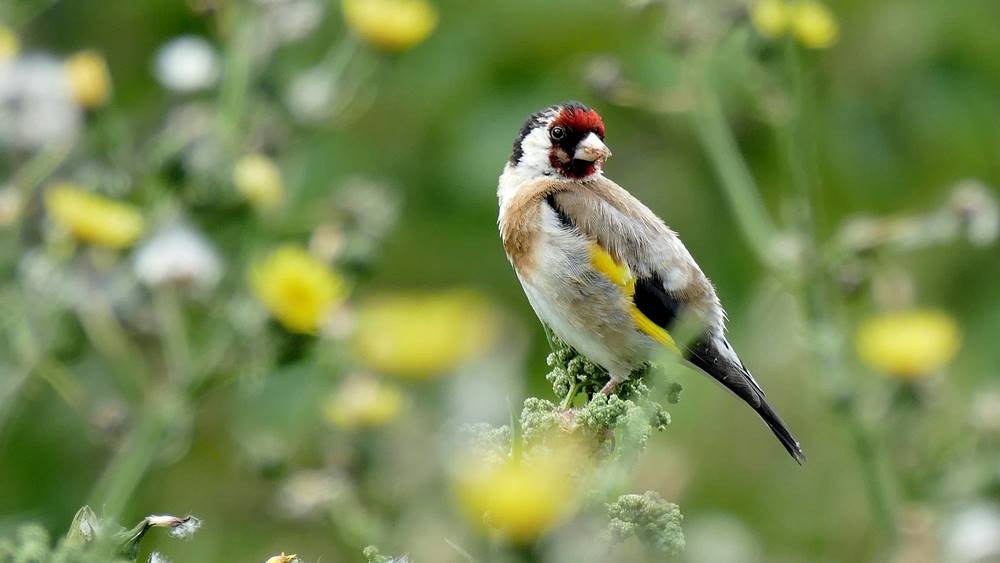
When we think about a goldfinch’s diet, seeds are usually the first thing that comes to mind. But can we enrich its diet with fruit, vegetables and fresh greens?
The answer is yes, provided we choose suitable foods and offer them in appropriate amounts.
Fresh foods can add variety to the diet while providing vitamins, minerals, fibre and beneficial plant compounds. However, this does not mean that more is always better.
Which vegetables can goldfinches eat?
Small amounts of different fresh vegetables and leafy greens can be offered, including:
- broccoli
- carrot
- courgette (zucchini)
- cucumber
- bell pepper
- rocket (arugula)
- endive
- small amounts of leafy greens
Variety is generally preferable to offering the same vegetable every day.
All fresh produce should be washed thoroughly and served plain, without salt, oil, sauces or seasonings.
What about fruit?
Apple without seeds, pear, strawberries, berries and small amounts of melon can be included as part of a varied diet.
Fruit, however, does not need to make up a large proportion of a goldfinch’s diet. Because it naturally contains sugars, it is better treated as an occasional addition rather than an everyday staple.
For such a small bird, a small piece is enough.
Safe does not mean “as much as they want”
This is an important point that is often overlooked.
A food may be safe for a goldfinch, but that does not mean it should always be available in the cage.
Offering excessive amounts of fruit, for example, unnecessarily increases sugar intake. Similarly, large quantities of foods with a high water content may make the droppings appear more watery.
The goal is variety in moderation.
What about wild greens?
This is particularly interesting when it comes to goldfinches. In their natural environment, they forage for seeds and plant material from a variety of wild plants.
Suitable, correctly identified wild greens can provide additional dietary variety. However, never collect plants from areas that may have been exposed to pesticides, herbicides, traffic pollution or animal faeces.
If you are not completely certain that you have correctly identified a wild plant, do not offer it.
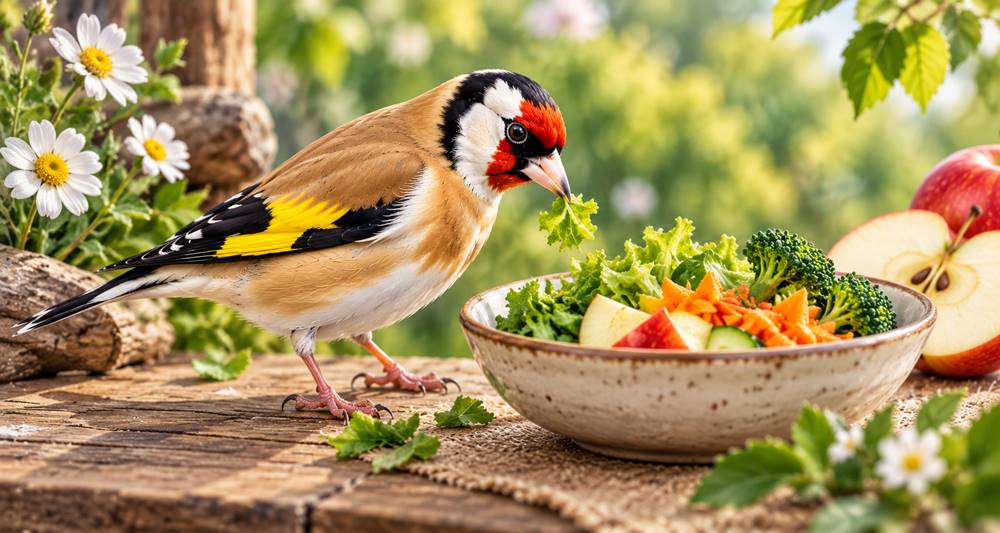
How should I introduce a new food?
Don’t be surprised if your goldfinch looks at the broccoli or carrot you have carefully prepared and simply… ignores it!
Give your bird time. Offer a very small amount and try again on different days.
Never remove the bird’s regular food in an attempt to force it to try something new.
Fresh food leftovers should also not remain in the cage for many hours, particularly in warm weather, as they can spoil quickly.
Which foods should goldfinches avoid?
Do not offer avocado, chocolate, coffee or other caffeinated products, alcohol, or foods high in salt, sugar or fat.
Apple seeds and the stones or pits of stone fruits should also be removed.
More generally, just because a food is safe for us does not mean it is suitable for a bird.
The droppings changed after eating vegetables. Is this normal?
After eating foods with a high water content, you may notice more liquid surrounding the formed part of the droppings. This is not necessarily the same as diarrhoea.
However, if the change persists or is accompanied by reduced appetite, weight loss, fluffed-up feathers, lethargy or changes in behaviour, contact a veterinarian experienced in avian medicine.
FAQ
- Can goldfinches eat apples?
Yes, in small amounts. Always remove the seeds before offering apple.
- Can goldfinches eat carrots?
Yes. A small amount can be offered, for example finely chopped or grated.
- Can goldfinches eat broccoli?
Yes. A small amount of thoroughly washed broccoli can be included as part of a varied diet.
- Can goldfinches eat cucumber?
Yes, in moderation. Cucumber has a high water content, so there is no need to offer large amounts.
- Should goldfinches eat fruit every day?
No. Fruit can be offered occasionally and in small portions as part of a balanced diet.
PetFoodHarmony Tip
Don’t try to make your goldfinch’s diet “better” simply by adding more and more different foods.
Variety is valuable when it comes with balance, appropriate portions and safety. Introduce new foods gradually, observe how your bird responds, and remember that fruit and vegetables complement a properly planned staple diet — they do not replace it.
And if a change in appetite, weight, droppings or behaviour persists, don’t try to correct it simply by changing the menu. Seek advice from a veterinarian experienced in avian medicine.

Θα χαρώ να διαβάσω τα σχόλιά σας