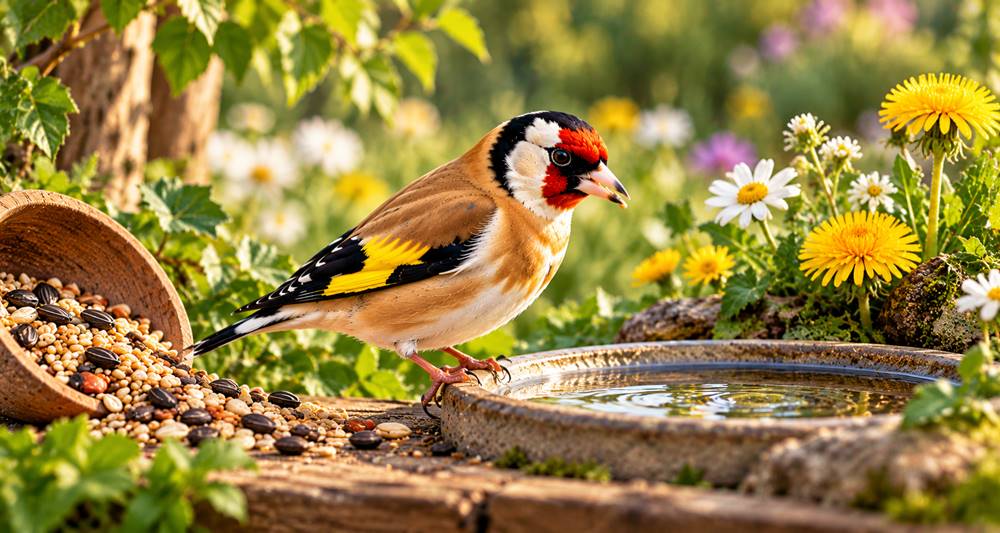
Goldfinches are small, active birds with specific nutritional needs. We may choose a high-quality food, fill their feeders every day, and still make mistakes without even realising it.
And quite often, the problem is not simply what we offer, but how we offer it, how much we provide, and how often.
Let’s explore seven common goldfinch feeding mistakes and how we can avoid them.
- Relying Exclusively on Seeds
Seeds are an important part of a goldfinch’s natural diet. However, a seed mix does not necessarily provide all essential nutrients in the right proportions.
An exclusively seed-based diet may be deficient in certain vitamins and minerals.
What to do instead:
Choose a nutritionally balanced staple diet suitable for goldfinches, with guidance from an avian veterinarian when needed. Suitable fresh greens and vegetables can also provide variety, but they should not be considered a guaranteed solution to nutritional deficiencies.
- Offering Too Many High-Fat Seeds
Niger seeds, hemp seeds, and other high-fat seeds can be included in a goldfinch’s diet.
Problems may arise when these seeds dominate the diet without considering the bird’s overall energy requirements.
What to do instead:
Pay attention to the composition of the seed mix and avoid constantly adding extra high-fat seeds as treats.
- Not Checking What Your Goldfinch Actually Eats
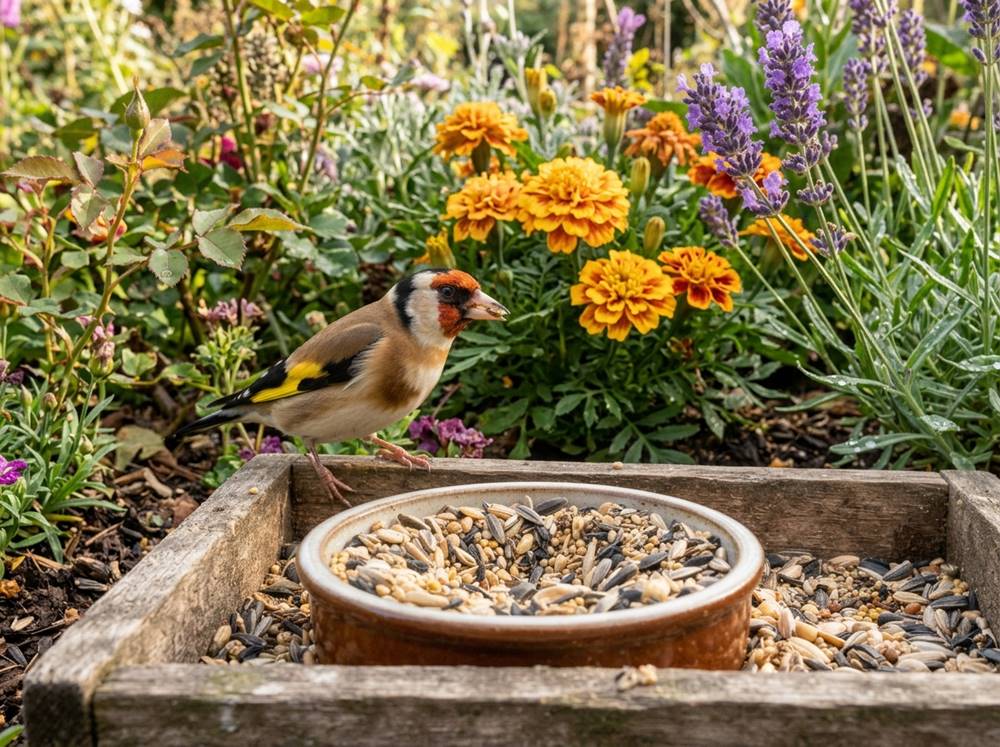
A full feeder does not necessarily mean your goldfinch is eating a balanced diet.
Your bird may select its favourite seeds and leave the others behind. Empty seed husks can also make the feeder appear fuller than it really is.
What to do instead:
Check the feeder daily, remove empty husks, and observe which seeds your goldfinch actually consumes.
- Changing Food Too Suddenly
A sudden dietary change may cause your goldfinch to reject the new food or reduce its overall food intake.
For such a small bird, inadequate food consumption can quickly become dangerous.
What to do instead:
Introduce dietary changes gradually while monitoring appetite, body weight, and droppings.
Never withhold your goldfinch’s usual food to force it to accept something new.
- Giving Supplements Without a Clear Need
More vitamins do not necessarily mean better health.
Inappropriate supplementation can cause nutritional imbalances, while excessive amounts of certain fat-soluble vitamins may be harmful.
What to do instead:
Avoid adding vitamins, calcium, or other supplements without first having your bird’s diet and individual needs assessed by an avian veterinarian.
- Storing Food Incorrectly
Seeds exposed to moisture or high temperatures may deteriorate and develop mould.
Similarly, fresh foods can spoil quickly when left in the feeder for too long.
What to do instead:
Store food in a clean, dry container in a cool place. Check expiry dates, smell, and appearance, and remove leftover fresh foods promptly.
Never offer mouldy or spoiled seeds.
- Ignoring Changes in Weight and Appetite
A goldfinch may still appear active even when a health problem is developing.
Reduced appetite, weight loss, or changes in feeding behaviour should never be ignored.
What to do instead:
Observe your bird’s behaviour and food intake every day. Regular weighing, using a safe method, can help identify changes early.
If your goldfinch stops eating, becomes noticeably weak, or sits motionless with fluffed-up feathers, seek immediate veterinary attention.
Frequently Asked Questions (FAQ)
- Is a high-quality seed mix enough for a goldfinch
Not necessarily. Nutritional adequacy depends on the mix’s composition, the amount offered, and what the bird actually consumes.
- Can I give my goldfinch niger seeds every day?
Niger seeds can be included in a properly formulated seed mix. Their quantity should be considered alongside the other seeds and the bird’s individual nutritional needs.
- Does my goldfinch need vitamins in its drinking water?
Not necessarily. Adding supplements to drinking water without veterinary guidance may result in inaccurate dosing or affect water consumption.
- How can I tell if my goldfinch is not eating enough?
Monitor actual food intake, body weight, droppings, and activity levels. A sudden reduction in appetite requires prompt attention.
PetFoodHarmony Tip
Good nutrition depends not only on food quality but also on our everyday feeding habits.
Check what your goldfinch actually eats, avoid excessive amounts of particular foods, and pay attention to changes in behaviour and body weight.
Small improvements in daily feeding practices can make a meaningful difference to your bird’s welfare.
And remember: when signs of illness appear, changing the diet is not a substitute for an examination by an avian veterinarian.

Θα χαρώ να διαβάσω τα σχόλιά σας