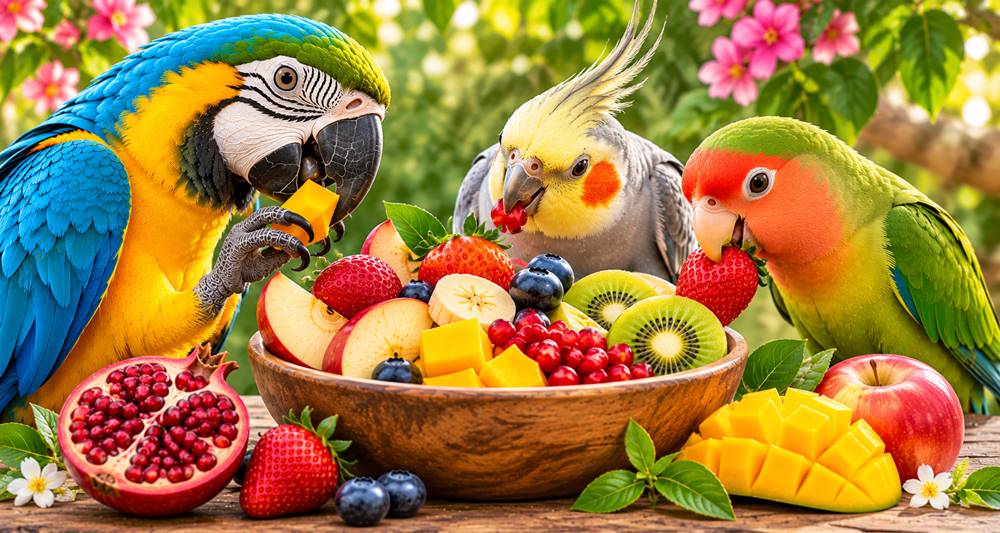
Apples, bananas, grapes, strawberries, or pomegranates? Fruits can add color, different flavors, and valuable nutrients to a parrot’s daily menu.
However, no matter how excited our feathered friends may become when they see a sweet treat, there is something important we should remember: fruit should not replace the foundation of a balanced diet.
So, which fruits can parrots safely eat? How should we prepare them, and how often should we offer them?
Let’s explore!
Why Are Fruits Beneficial for Parrots?
Fruits contain water, dietary fiber, vitamins, and various beneficial plant compounds.
Depending on the type, they may provide carotenoids, vitamin C, and antioxidant compounds. Their different colors, aromas, and textures can also encourage natural food exploration.
However, many fruits contain considerable amounts of natural sugars.
For most companion parrot species, fruit should be a complementary part of the diet rather than the main food source.
There are exceptions, of course. Lories, lorikeets, and certain other species have specialized nutritional requirements. This is why the same feeding plan cannot be applied to every parrot.
What Fruits Can Parrots Eat?
Many fruits can be safely included in a parrot’s diet when properly prepared.
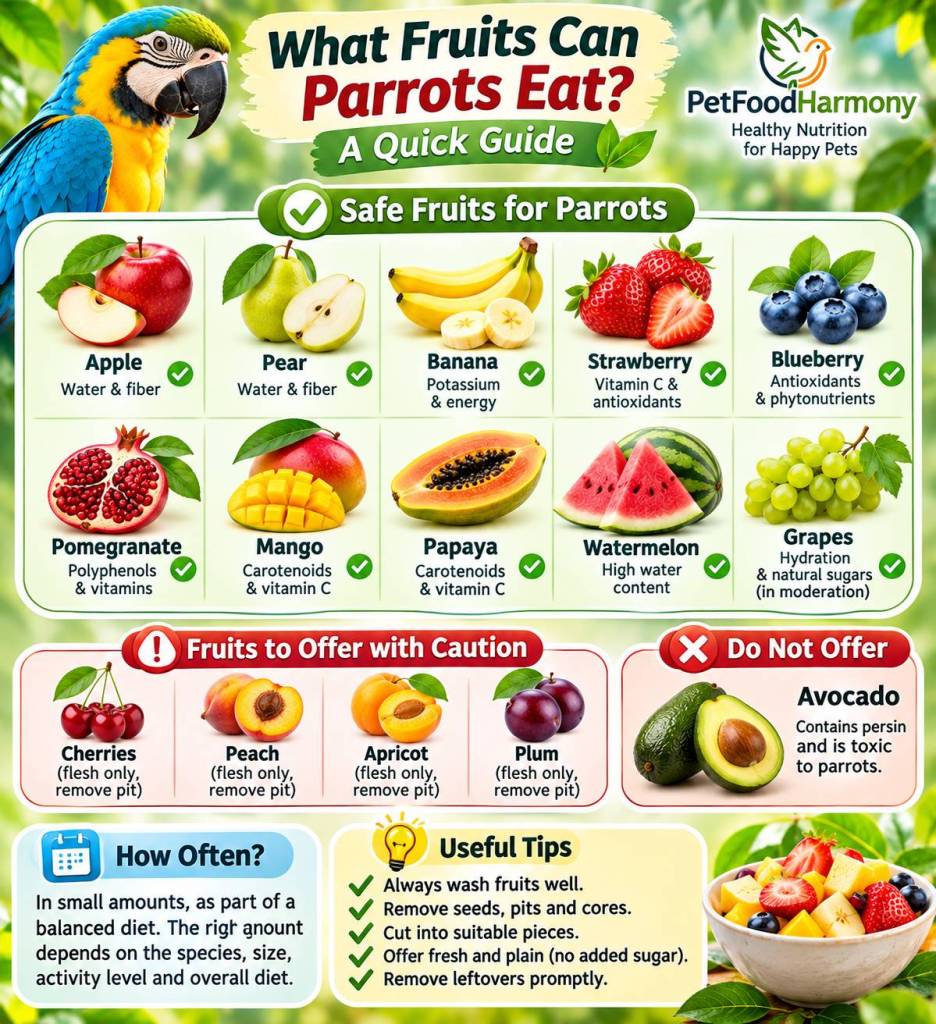
This list is only a starting point. There is no need to offer every fruit mentioned here or to choose exotic varieties.
Fresh, seasonal fruits can also be excellent choices.
Which Fruits Require Special Caution?
Not every part of a fruit is suitable for parrots.
Apples and pears: Always remove the seeds and core. The seeds contain cyanogenic compounds and should not be offered.
Cherries, peaches, apricots, and plums: The flesh may be offered when properly prepared, but the hard pits must be completely removed. These pits contain compounds that can release cyanide when crushed or chewed.
Avocado: Never offer avocado to parrots. It contains persin and has been associated with serious toxicity in birds.
We should also avoid spoiled, moldy, or heavily processed fruits containing unsuitable additives.
Remember that a fruit being healthy for humans does not automatically mean that every part of it is safe for birds.
How Often Can Parrots Eat Fruit?
This is where we need to distinguish enjoyment from nutritional requirements.
For many companion parrots, small amounts of suitable fruit can be included as part of a varied diet.
However, the appropriate amount and frequency depend on several factors, including:
- Species and body size
- Activity level
- Main diet
- Age and life stage
- Individual health status
A small budgie does not have the same nutritional needs as a large macaw.
Similarly, a lorikeet requires a specialized feeding plan that differs considerably from the diet of a budgie or cockatiel.
There is no single fruit portion that is appropriate for every parrot.
Fresh or Dried Fruit?
Fresh fruit is generally the more practical option because it contains water, and we can easily monitor its quality and serving size.
Dried fruit contains much less water, which means its natural sugars are more concentrated.
If dried fruit is offered occasionally, choose products without added sugar, unsuitable preservatives, or other unnecessary additives.
Remember that a small portion of dried fruit is not nutritionally equivalent to the same weight of fresh fruit.
How Should We Prepare Fruit for Parrots?
Before offering fruit to our feathered friends, a few simple precautions can make a real difference.
Always wash fresh fruit thoroughly.
Remove unsafe seeds, pits, and other unsuitable parts.
Cut fruit into appropriately sized pieces, taking the bird’s size and feeding behavior into account.
Serve fruit plain, without added sugar, syrup, or sweetened toppings.
Finally, remove uneaten fresh fruit promptly, particularly during warm weather, when spoilage can occur more quickly.
And don’t forget: fruit never replaces fresh, clean drinking water.
What If My Parrot Constantly Asks for Fruit?
Sweet flavors can be particularly appealing to parrots.
If your bird prefers bananas or grapes over other foods, this does not mean you should increase the amount offered.
Instead, maintain a balanced feeding routine and encourage your parrot to explore a variety of suitable foods.
Small pieces of fruit can also be incorporated into safe foraging activities, encouraging natural food-seeking behavior and making mealtimes more engaging.
Frequently Asked Questions
- Can parrots eat bananas?
Yes. Ripe bananas can be offered in small amounts as part of a balanced diet.
- Can parrots eat apples with the skin?
Yes, provided the apple has been thoroughly washed. Always remove the seeds and core before serving.
- Can parrots eat grapes?
Yes. Grapes can be offered after thorough washing and in moderate amounts because they contain natural sugars.
- Can parrots eat watermelon?
Yes. Watermelon flesh can be offered in small amounts, preferably without seeds.
- Can parrots eat fruit every day?
For many species, small amounts of suitable fruit may be included regularly in the diet. However, the appropriate frequency depends on the species and the overall nutritional plan.
- Can parrots eat avocado?
No. Avocado is not considered safe for parrots and should always be avoided.
PetFoodHarmony Tip
Don’t offer fruit simply because it makes your parrot happy. Offer it with knowledge and care.
A small piece of apple, a few pomegranate arils, or an appropriate portion of mango can add flavor, variety, and nutritional interest to your bird’s diet.
What matters most is understanding the nutritional needs of the species you care for and making sure favorite treats never replace essential foods.
And if your parrot gets excited every time it sees a banana, enjoy that little moment together! Just remember that our love for our feathered friends isn’t measured by how full their food bowls are.

Θα χαρώ να διαβάσω τα σχόλιά σας