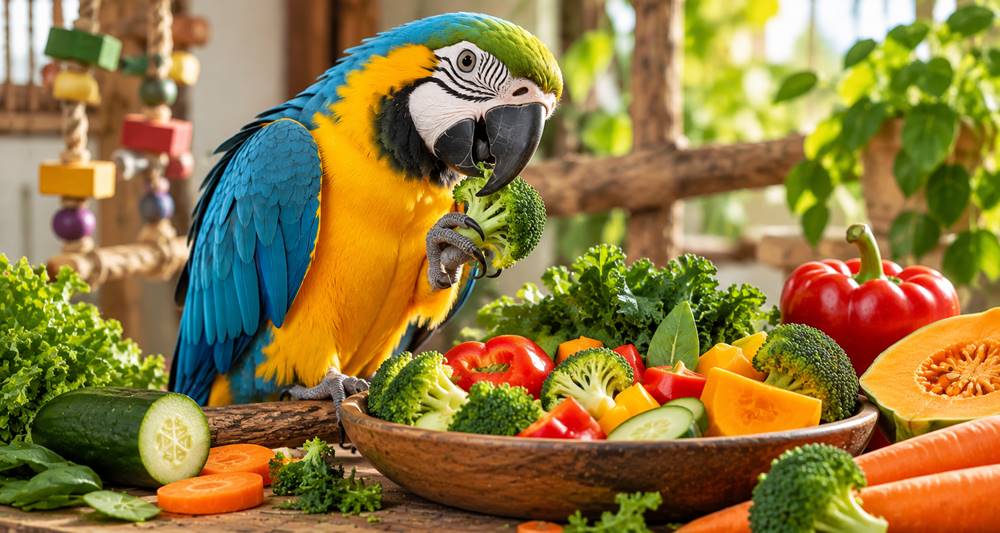
When we think about a parrot’s diet, seeds may be one of the first things that come to mind. In reality, however, a balanced diet for many companion parrot species requires much more variety.
Suitable vegetables for parrots can provide vitamins, minerals, fiber, beneficial plant compounds, and additional moisture. At the same time, different flavors, colors, and textures can make everyday meals more interesting and encourage natural food exploration.
So, the question is not simply, “Can my parrot eat vegetables?” but rather which vegetables are suitable, how often should they be offered, and how should we serve them?
What Vegetables Can Parrots Eat?
There are many safe choices available. Depending on the species and the individual needs of the bird, we can offer a variety of vegetables and rotate them throughout the week.
Some good options include:
- Carrots can be served raw, grated, or cut into appropriately sized pieces. They are particularly valuable for their beta-carotene content.
- Red bell peppers can be offered raw and provide carotenoids as well as vitamin C.
- Broccoli can be served raw or lightly cooked. It provides fiber and a variety of micronutrients.
- Pumpkin can add beta-carotene and fiber to the diet and is often convenient to serve cooked and plain.
- Zucchini provides moisture and fiber and can be offered raw or lightly cooked.
- Cucumber has a high water content and can contribute to dietary variety and hydration, although it should not dominate the vegetable portion of the diet.
- Peas provide fiber, carbohydrates, and some plant protein and can be served fresh or cooked without salt.
- Sweet potato is another source of beta-carotene and carbohydrates and should be offered cooked and plain.
- Dark leafy greens can provide carotenoids, folate, minerals, and other valuable nutrients. Rotating different suitable greens is preferable to relying on only one type.
Why Are Colorful Vegetables So Valuable?
One easy practical rule is to avoid offering the same vegetable every day.
Orange, red, and dark green vegetables are particularly interesting from a nutritional perspective. Carrots, pumpkin, sweet potatoes, and red bell peppers contain carotenoids, some of which the body can convert into vitamin A.
Vitamin A plays an important role in maintaining healthy epithelial tissues, normal vision, and immune function.
However, this does not mean that we should fill the food bowl every day with one “super vegetable.” Variety is more important than excess.
Raw or Cooked Vegetables?
Both can have a place in a parrot’s diet.
Many vegetables can be served raw after being thoroughly washed. Others, such as sweet potatoes and pumpkin, are often more practical when cooked.
Whenever we cook vegetables for our parrots, they should be served plain: no salt, butter, oil, sauces, or seasonings.
And, of course, cooked food should be allowed to cool before it is offered to the bird.
How Often Should Parrots Eat Vegetables?
There is no single quantity or serving schedule that is suitable for every parrot. A budgie, a cockatiel, and an African Grey differ considerably in size, energy requirements, and nutritional needs.
For many companion parrot species, however, a variety of suitable vegetables can be a regular part of the daily diet, alongside an appropriate nutritionally balanced staple food.
What we want to avoid is offering such a large amount of one favorite food that the parrot ignores the other important components of its diet.
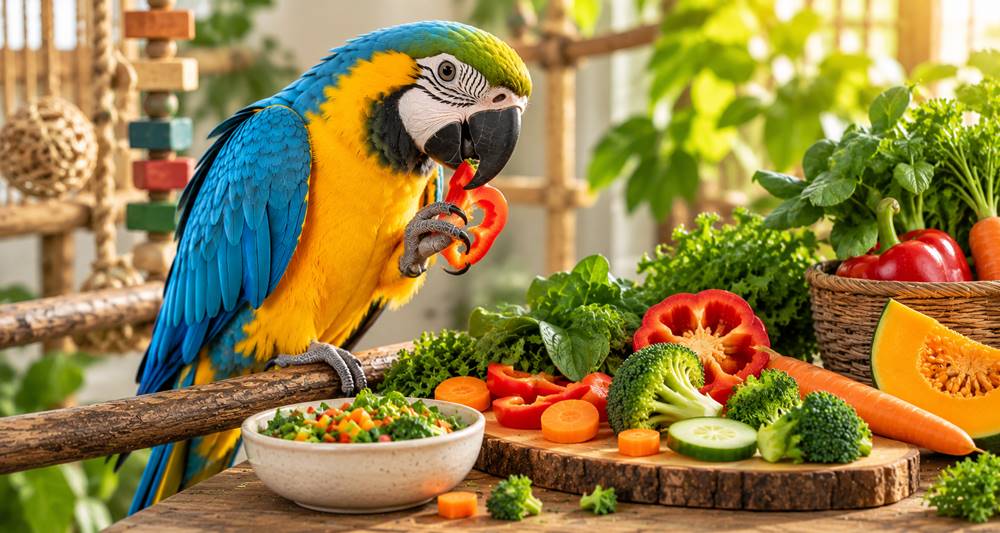
What If My Parrot Refuses Vegetables?
This is where patience becomes important!
A parrot that has eaten the same foods for years may look at a piece of broccoli or bell pepper as if it were a completely unfamiliar object.
That does not mean the bird will never eat it.
Try presenting vegetables in different ways: finely chopped, grated, cut into thin strips, or safely positioned where the bird can investigate them.
Some parrots need repeated exposure to a new food before they finally decide to taste it.
Never force the bird and, most importantly, never withhold familiar food in an attempt to make a parrot eat a new food. Any major dietary transition should be gradual and carefully monitored.
Food Hygiene Matters
Fresh vegetables should always be washed thoroughly before serving.
Remove any spoiled or moldy parts and use clean bowls and utensils during food preparation.
Fresh foods should also not remain in the cage for extended periods, particularly in warm weather. Higher temperatures accelerate spoilage and microbial growth, so uneaten fresh food should be removed promptly.
Are There Vegetables Parrots Should Avoid?
Yes. A food being healthy for humans does not automatically mean that it is safe for parrots.
Avocado, for example, should not be offered to parrots because it contains persin and has been associated with serious toxicity in birds.
Onion and garlic are also best avoided as routine foods, and prepared vegetables containing salt, sauces, seasonings, or other additives should not be offered.
Whenever you are uncertain about the safety of a particular food, it is better not to experiment. Check with an avian veterinarian or another appropriately qualified professional first.
Adding Seasonal Variety
Changing seasons can be a wonderful opportunity to introduce different vegetables into your parrot’s menu.
During autumn, for example, pumpkin, sweet potato, carrots, and suitable leafy greens can add color and variety to the food bowl.
There is no need to redesign your parrot’s entire diet simply because the season has changed. Instead, use suitable seasonal produce to add variety to an already balanced feeding plan.
Frequently Asked Questions – FAQ
- Can parrots eat vegetables every day?
For many companion parrot species, a variety of safe vegetables can be offered regularly, including daily, as part of a balanced diet. Individual requirements vary according to species, size, life stage, activity level, and health status.
- What are some good vegetables for parrots?
Carrots, bell peppers, broccoli, pumpkin, zucchini, sweet potatoes, and suitable dark leafy greens are among the foods that can contribute variety and valuable nutrients to a parrot’s diet.
- Can parrots eat cucumber?
Yes. Cucumber can be offered after thorough washing. It contains a large amount of water and can contribute to dietary variety and moisture intake, but it should not make up a large proportion of the diet.
- Can parrots eat bell peppers?
Yes. Sweet bell peppers can be a nutritious addition to the diet and are particularly interesting for their carotenoid content. Wash them thoroughly before serving.
- Can parrots eat avocado?
No. Avocado should not be offered to parrots because of the risk of toxicity in birds.
- What should I do if my parrot refuses all vegetables?
Keep offering suitable vegetables without forcing the bird. Experiment with different shapes, textures, and presentation methods. Some parrots need to encounter a new food many times before they recognize it as something edible.
If your parrot has been eating a very restricted diet for a long period, discuss any significant dietary transition with an avian veterinarian.
PetFoodHarmony Tip
Don’t search for the one “perfect” vegetable for your parrot. Aim for variety instead.
Rotate safe vegetables with different colors, textures, and nutritional profiles, and observe which ones your bird learns to enjoy. Introduce unfamiliar foods gradually and remember that nutritional needs vary according to species, age, activity level, and health status.
And one more thing: if your parrot looks at a piece of broccoli as though you have just placed an alien in the food bowl, don’t give up! Getting used to a new food often takes time.
At PetFoodHarmony, we believe that good nutrition is not about excess. It is about knowledge, variety, and balance.

Θα χαρώ να διαβάσω τα σχόλιά σας